

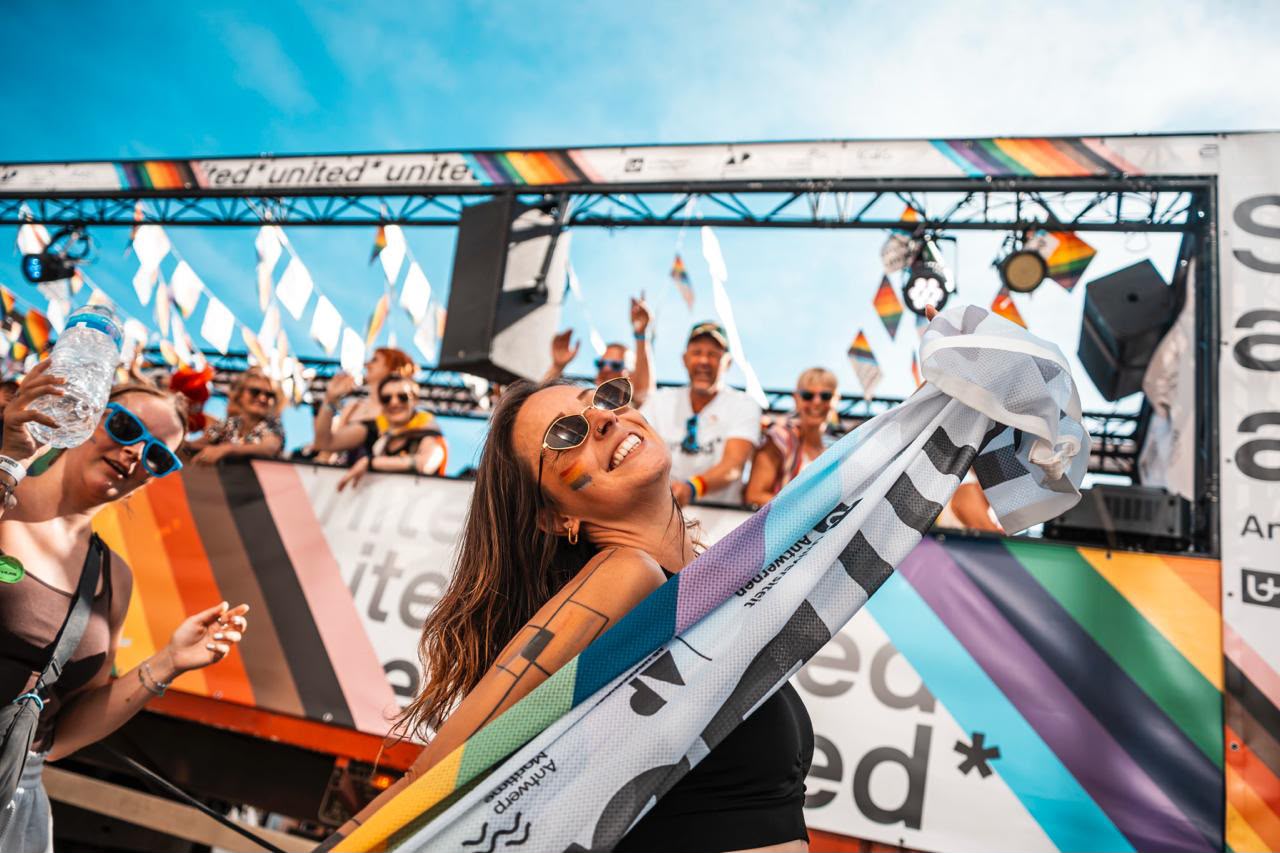
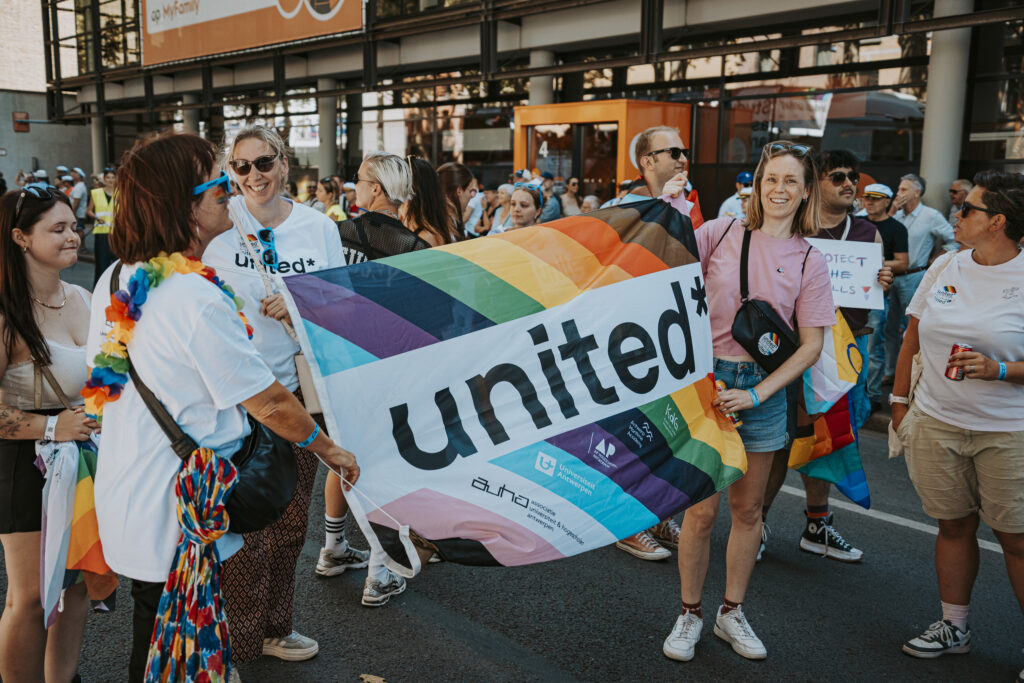
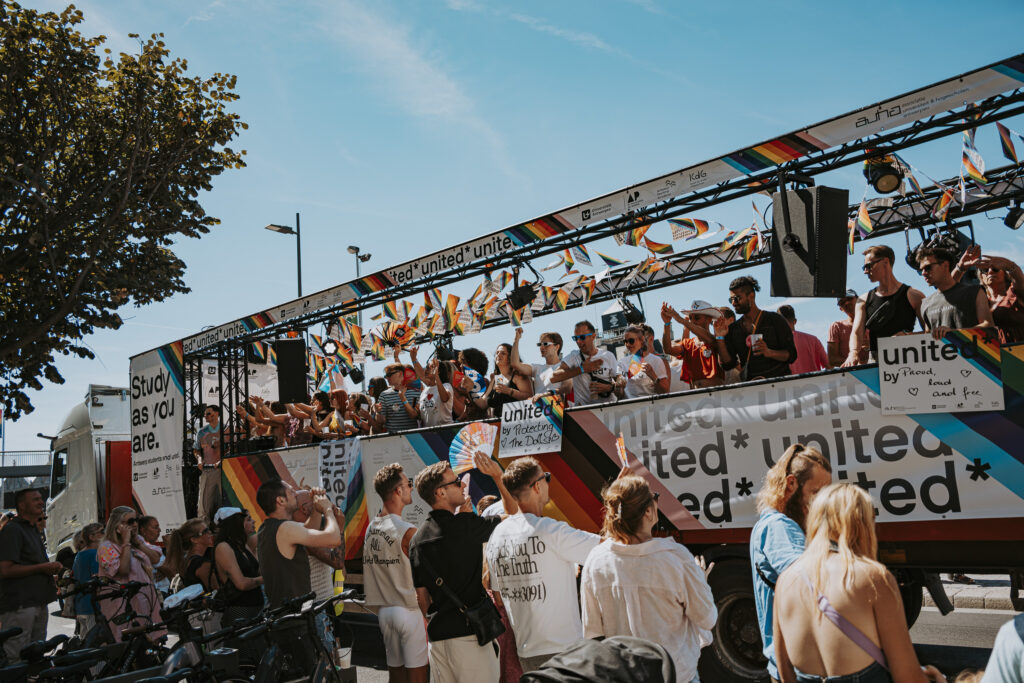
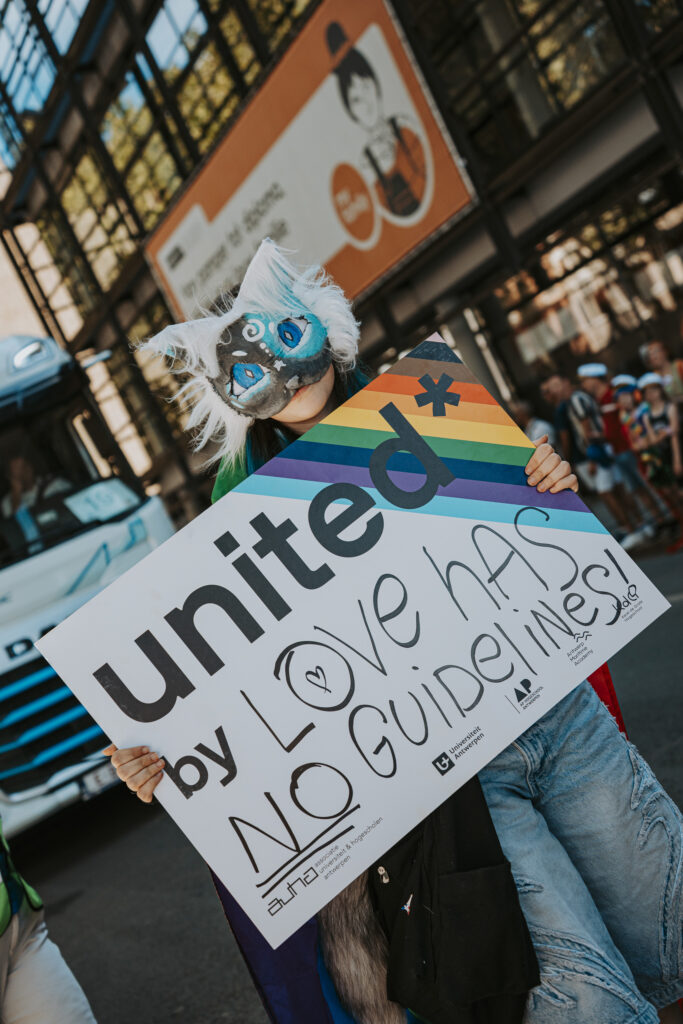
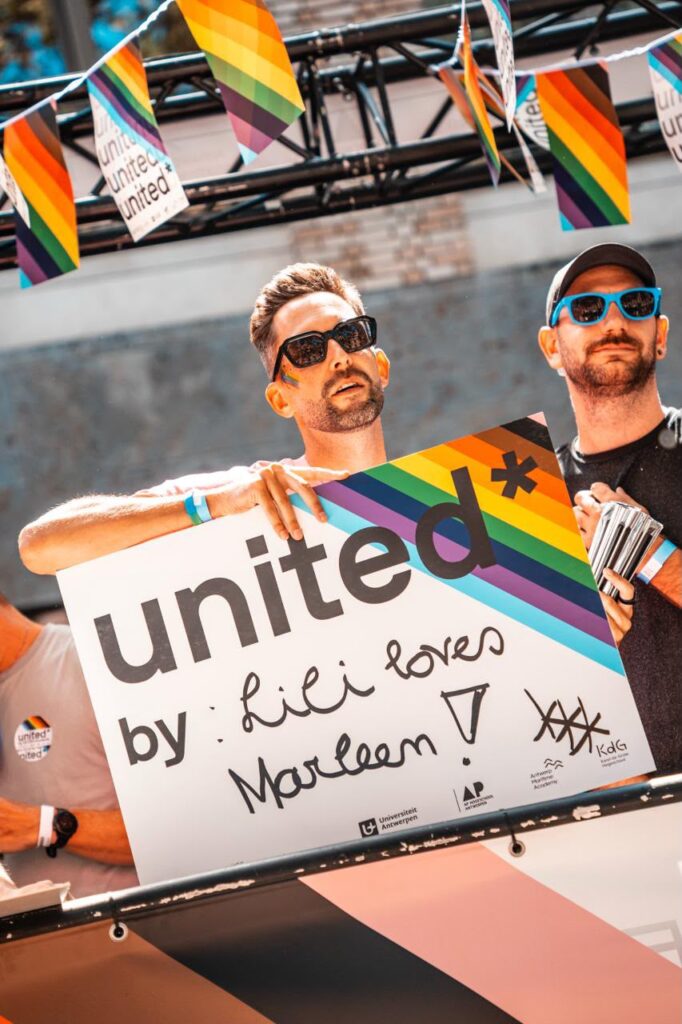
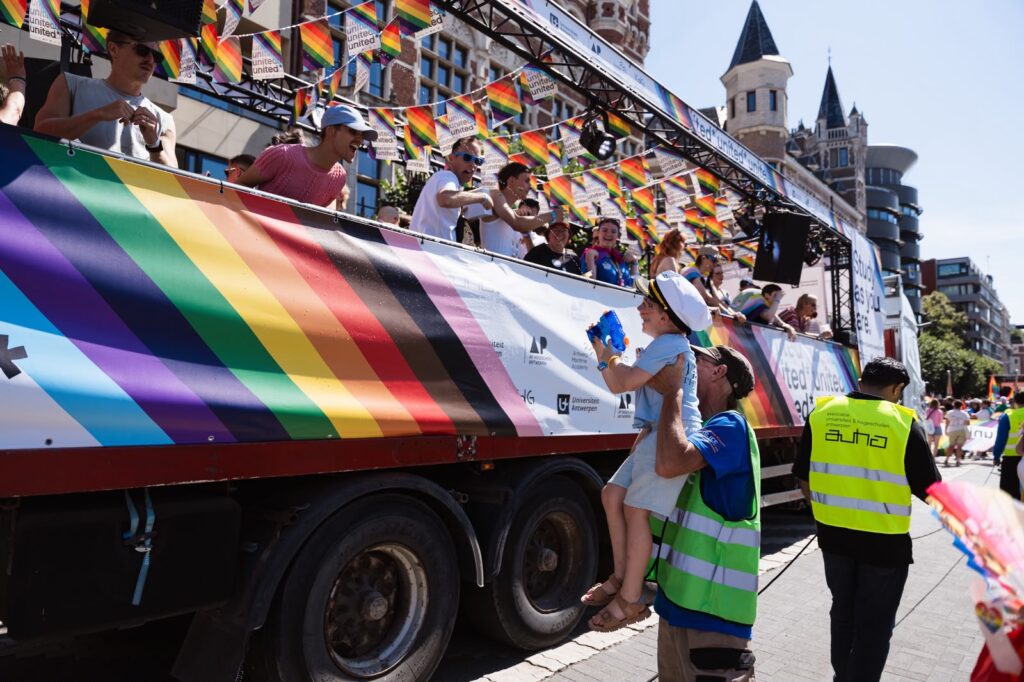
On Friday 8 August, Antwerp once again turned every shade of the rainbow during the Antwerp Pride Parade. The University of Antwerp was there, hand in hand with KdG, AP and AMA under the joint AUHA UNITED flag. On the AUHA parade float, we spoke with students and staff about visibility, inclusion and the meaning of this year’s theme, ‘Fearless’.
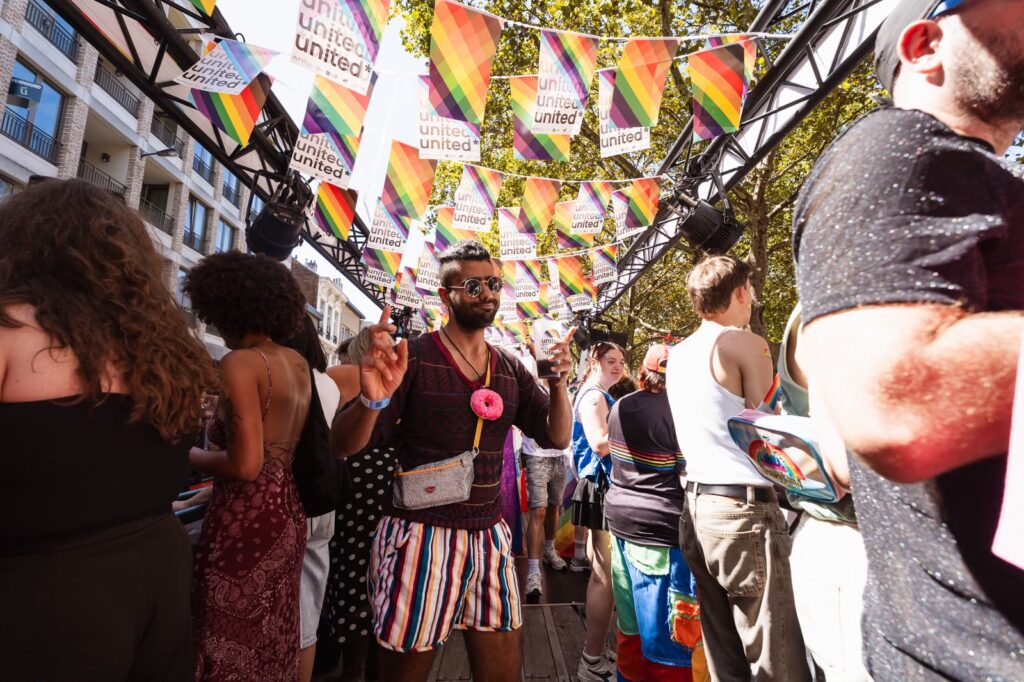
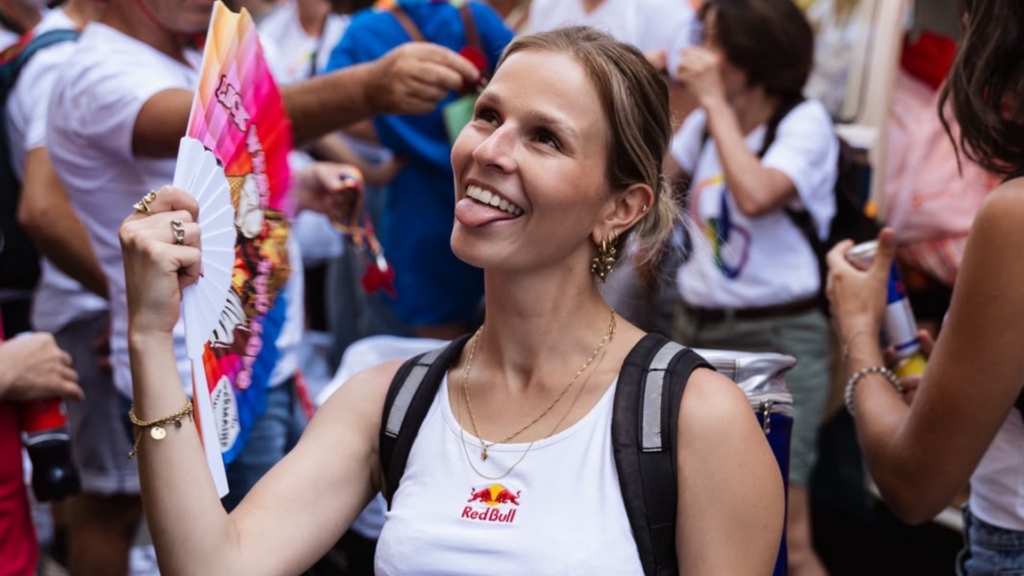
This year, students and staff of the University of Antwerp and Antwerp insitutions of applied sciences and arts, took part in the Antwerp Pride Parade. On and around the AUHA parade float, participants enjoyed a vibrant and unifying atmosphere for three hours, creating memories that will stay with them for a long time. It became one of the most heart-warming moments of this (already very hot) summer.
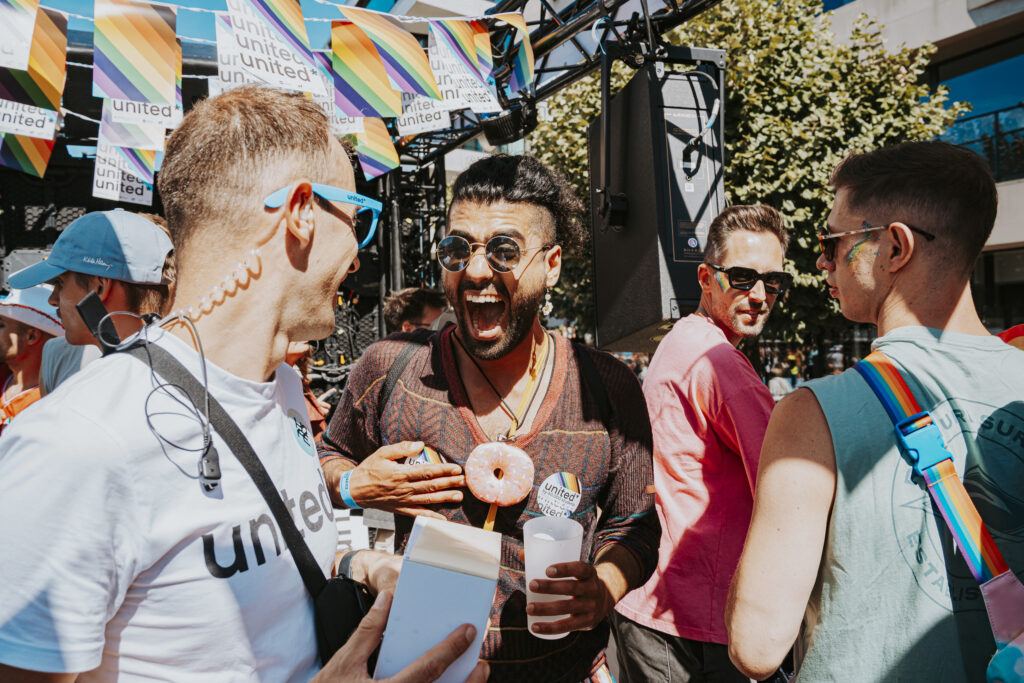
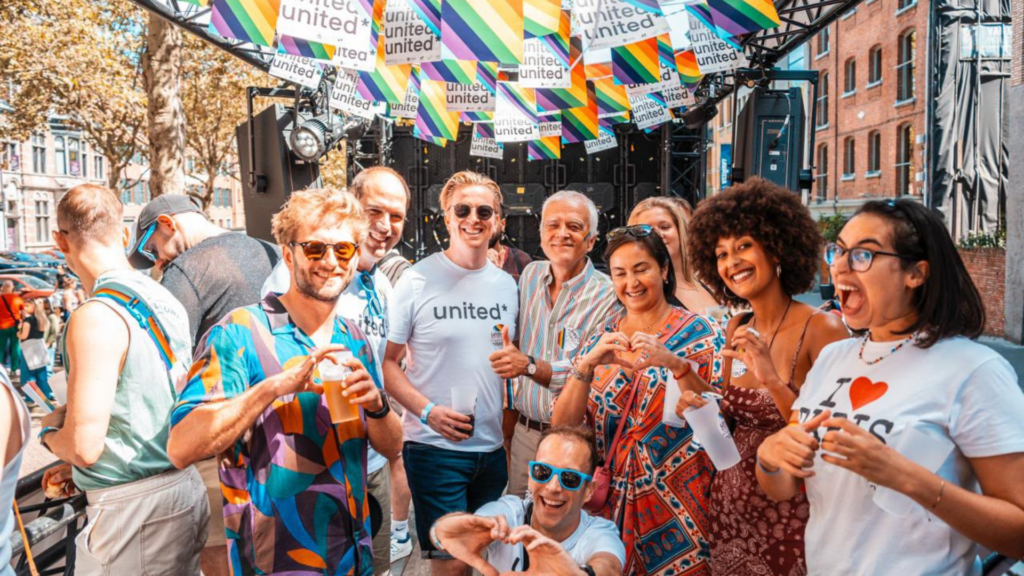
Participants danced to classics such as We Are Family while thousands of spectators waved, laughed and celebrated along the route. The crowd included people of all ages and backgrounds. The energy on the float and the enthusiasm alongside it created a powerful sense of connection.
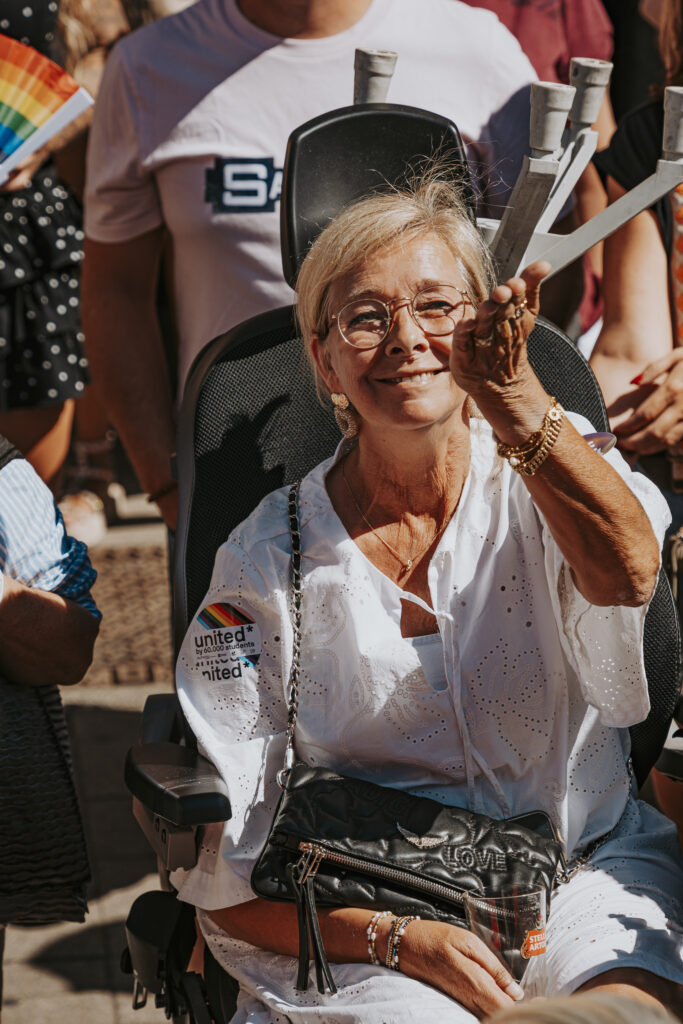
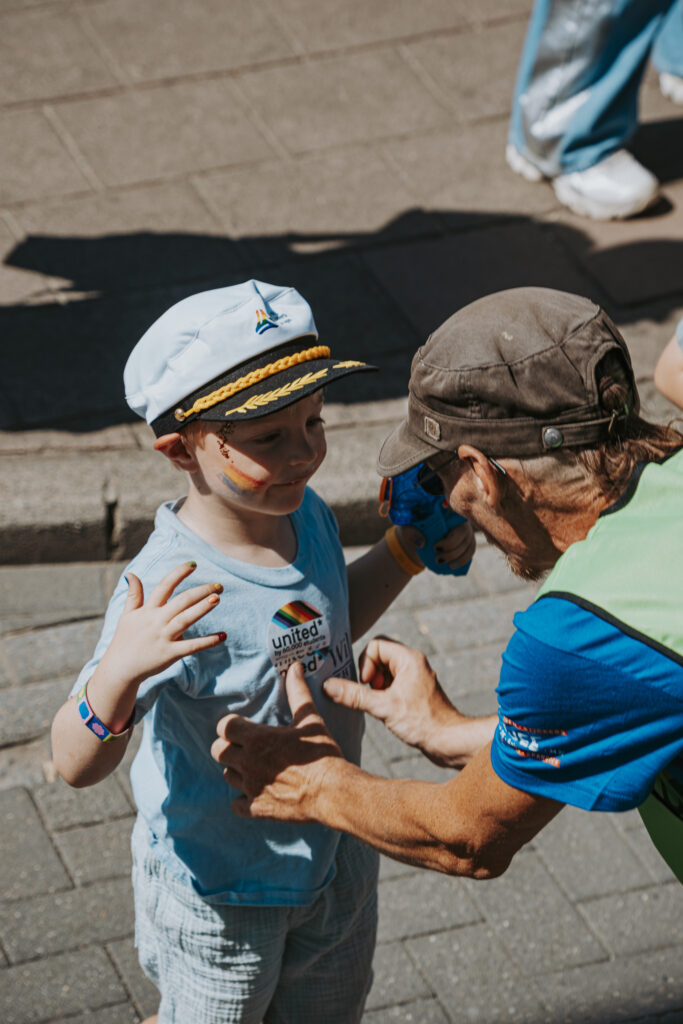
Pride is a great party, but it is also more than that. It is a chance for the LGBTQIA+ community to make it clear that everyone should be able to be themselves and love whoever they want. That’s still necessary. Today, more than ever. The theme of this edition was therefore well chosen: ‘Fearless’. A call to be yourself without fear, to make your voice heard and to continue building a society in which everyone feels at home.
Why we take part
For many participants, the University of Antwerp’s participation in the parade was a logical statement. ‘Universities have traditionally been at the forefront of social progress. As a university, we need to continue to take a leading role in fighting for equal rights and showing that we are open to everyone. That is our task,’ says Faras Abassi (he/him/his), PhD researcher in the Department of Biology, who was also on the AUHA float.
This echoes the university’s ambition to be a place where everyone feels welcome and respected, regardless of sexual orientation, gender identity or background. ‘The university’s participation is an expression of social engagement and solidarity based on shared values around equal opportunities and human rights. At the same time, it is a clear signal that students and staff are welcome and can feel safe at our institution,’ says Sam Smit (he/him/his, Diversity and Inclusion domain coordinator).
‘Also, in light of the growing hatred and polarisation in our society, it is more important than ever for the University of Antwerp to be here sending a clear message: ‘NOT here, NOT at our university’. A university is a community in its own right. We also see social trends reflected within our own UAntwerp community. As an institution, we need to stay fearless in the face of increasing division and exclusion. Sometimes it is far away, but sometimes it’s happening right next to us.’
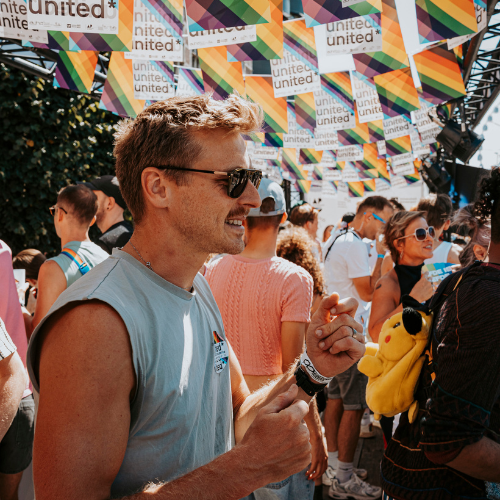
‘It is more important than ever for the University of Antwerp to be here sending a clear message: ‘NOT here, NOT at our university’. We need to be fearless in the face of increasing division and exclusion.’
– Sam Smit, he/him/his, Diversity and Inclusion domain coordinator
UNITED: one message, multiple institutions
For the second year in a row, the University of Antwerp took part within the broader AUHA partnership. This collaboration shows that inclusion does not stop at the boundaries of one institution. Together, we are stronger and our voices are louder.
Samantha Brunt (she/her/hers, Diversity and Inclusion team) puts it this way: ‘Of course, participating under the AUHA banner means that the University of Antwerp is slightly less visible as an individual institution at Pride, but it also sends the message that inclusion is not the responsibility of one organization alone. It helps to prevent Pride from being reduced to a one-off event, too. We want to show that this commitment continues throughout the rest of the year.’
Sam Smit adds: ‘As UAntwerp, together with the AUHA partners, we choose the unifying slogan UNITED. UNITED as higher education institutions in Antwerp. UNITED in all the diversity that the LGBTQIA+ community brings. And UNITED in the fight for equal opportunities and human rights.’
Celebration and protest
Anyone who only knows Pride from the colourful photos is missing part of the story. Pride originated as a protest movement, and that dimension remains important. Since Belgium organised its first Pride in 1996, important steps have been taken towards LGBTQIA+ rights. At the same time, many people are once again experiencing more uncertainty and barriers today.
That’s why we need to keep focusing on visibility. Pride is both a celebration of recognition and a call to remain vigilant when it comes to equal opportunities and respect.
Inclusion doesn’t stop after the parade
The University of Antwerp’s commitment to LGBTQIA+ inclusion is not limited to one day a year. In recent years, efforts have included:
- visibility and activities for the LGBTQIA+ community
- gender-inclusive communication
- support for trans people during their transition
- roll-out of gender-inclusive bathrooms
- active bystander training, reporting procedures and support channels to address discrimination and inappropriate behaviour
At the same time, Samantha stresses that there’s still lots of work to be done: ‘Safety remains an important issue, both on campus and online. And researchers working on queer topics also face negative reactions and hate campaigns. Inclusion work therefore remains essential.’
‘There’s still lots of work to be done. We need to keep working towards a safe environment and inclusion. Just look at the hateful reactions on social media or the abuse directed at researchers working on queer topics.’
– Samantha Brunt, she/her/hers, Diversity and Inclusion Team
What does ‘Fearless’ mean?
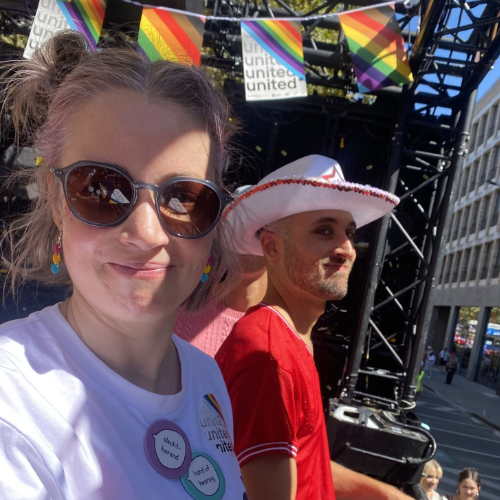
For Faras, the theme had a very personal meaning. ‘To me, fearless means that this year I dared to come and stand on the truck on my own. Last year I didn’t dare – I was still afraid that people would judge me. Now I just have fun. Fearless means that I feel free from judgement and from the feeling that I have to take what other people think into account.’
The theme also touches a nerve at a societal level. Fear of being judged, of deviating from the norm or showing your true self: many people recognise that feeling, both in the LGBTQIA+ community and beyond.
Nathalie Dens (she/her/hers, vice-rector for Social Engagement and International Policy): ‘Perhaps that is exactly why the theme feels so relevant today. It takes courage to be visibly yourself when you know that others may have a problem with that. But it also takes courage from those standing beside someone else: to speak up, to listen and to stand up for another person when needed.’
‘In a society where hatred is becoming more visible again, it is important to keep working towards an environment in which everyone feels welcome, valued and safe,’ says Samantha.
The power of getting to know each other
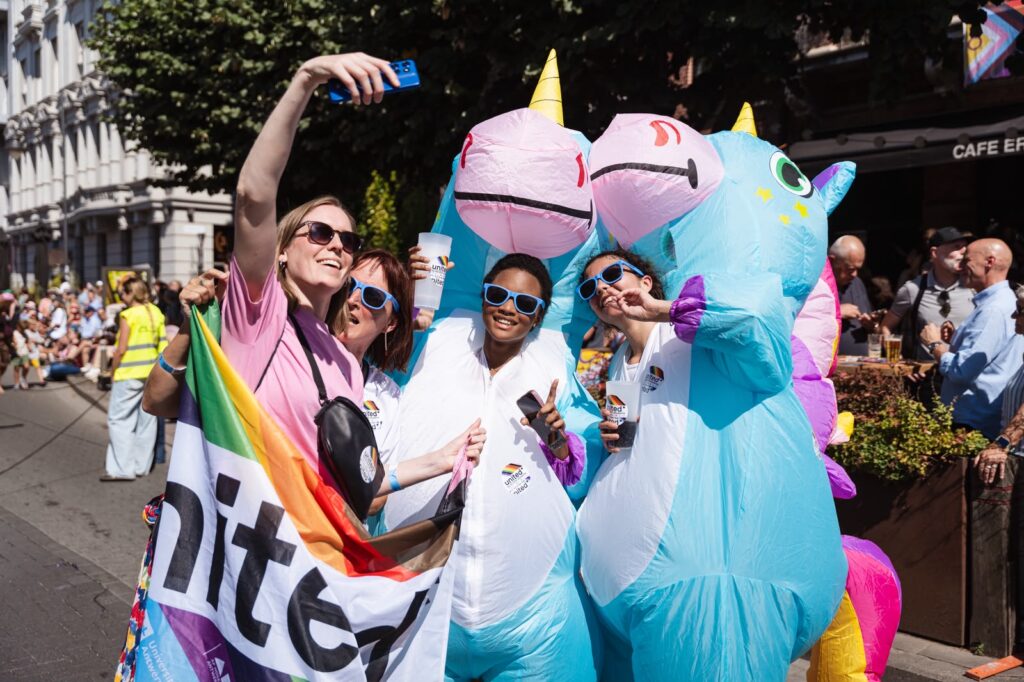
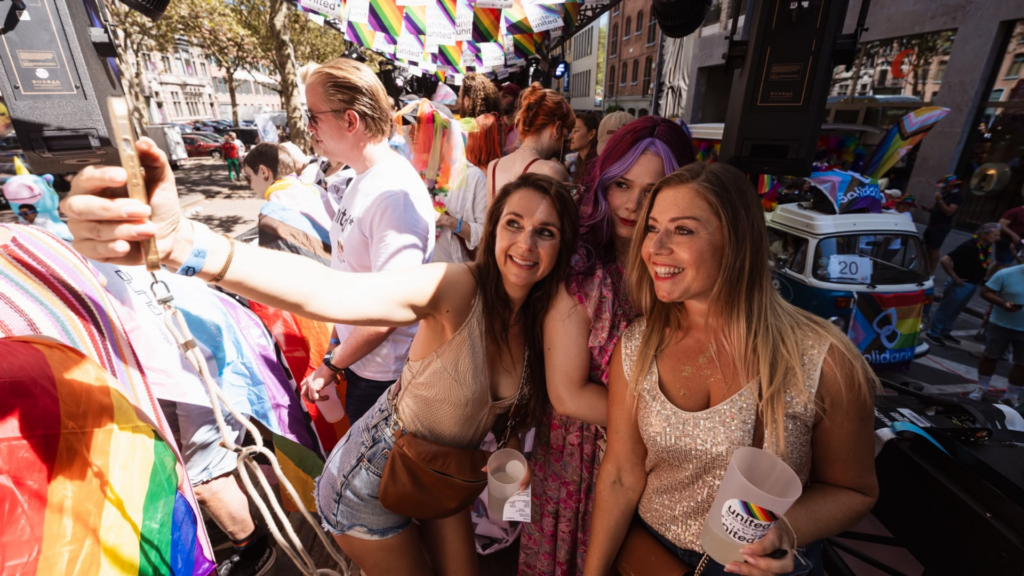
Perhaps one of the most meaningful aspects of Pride is something very simple: people meeting one another. Research has shown that people who personally know someone from the LGBTQIA+ community are more likely to support LGBTQIA+ rights. Because behind issues, opinions and labels are real people with real stories. When people get to know one another personally, they often focus more on what they have in common than on what sets them apart.
“It was heartwarming to feel the sense of connection on and alongside the float, across the institutions, between staff and students and across all the diversity in our universities. A KU Leuven colleague asked me if he could join our float next year. As far as I am concerned, he is more than welcome,” smiles Sam.
One message for all colleagues
I asked two participants what message they would like to share with their colleagues. Here is what they said.
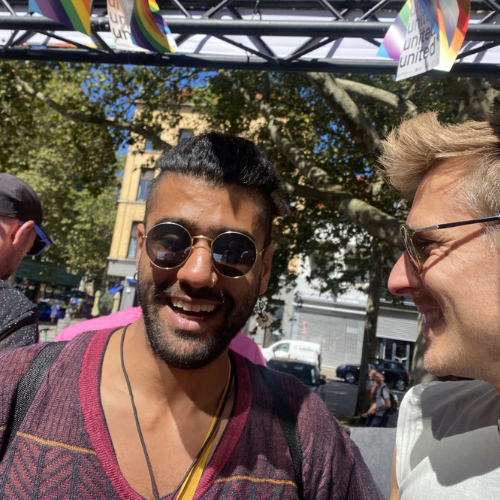
‘Diversity is a ‘class thing’. We are all part of one ‘social class’, as employees. We need to unite and feel more like one University of Antwerp. We have the same interests, work in the same productive environment where we strive for progress. Let’s make sure that everyone feels (and continues to feel) welcome.‘
– Faras Abassi (he/him/his), PhD researcher in the Department of Biology
‘Avoid making assumptions about someone’s gender or sexuality. Don’t assume you know everything.’
– Kiano Wauters (he/him/his), student at UAntwerp, content creator at YouAntwerp
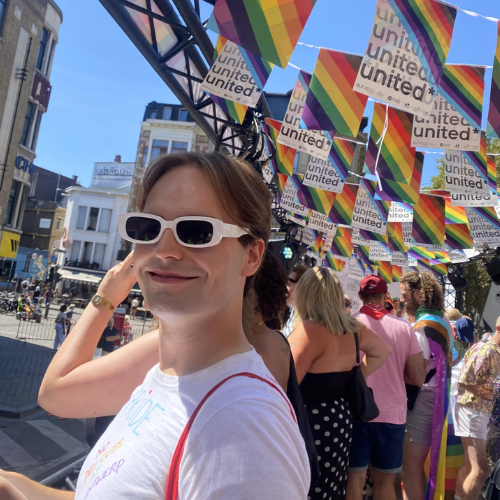
Perhaps these quotes capture the essence of the day best. Pride is about visibility, but ultimately it is also about connection. About the idea that there is a place for everyone. We are one. Or, as the song repeated: we are family.
Feel the joy
Soak up the family atmosphere at Pride in the photo album.