

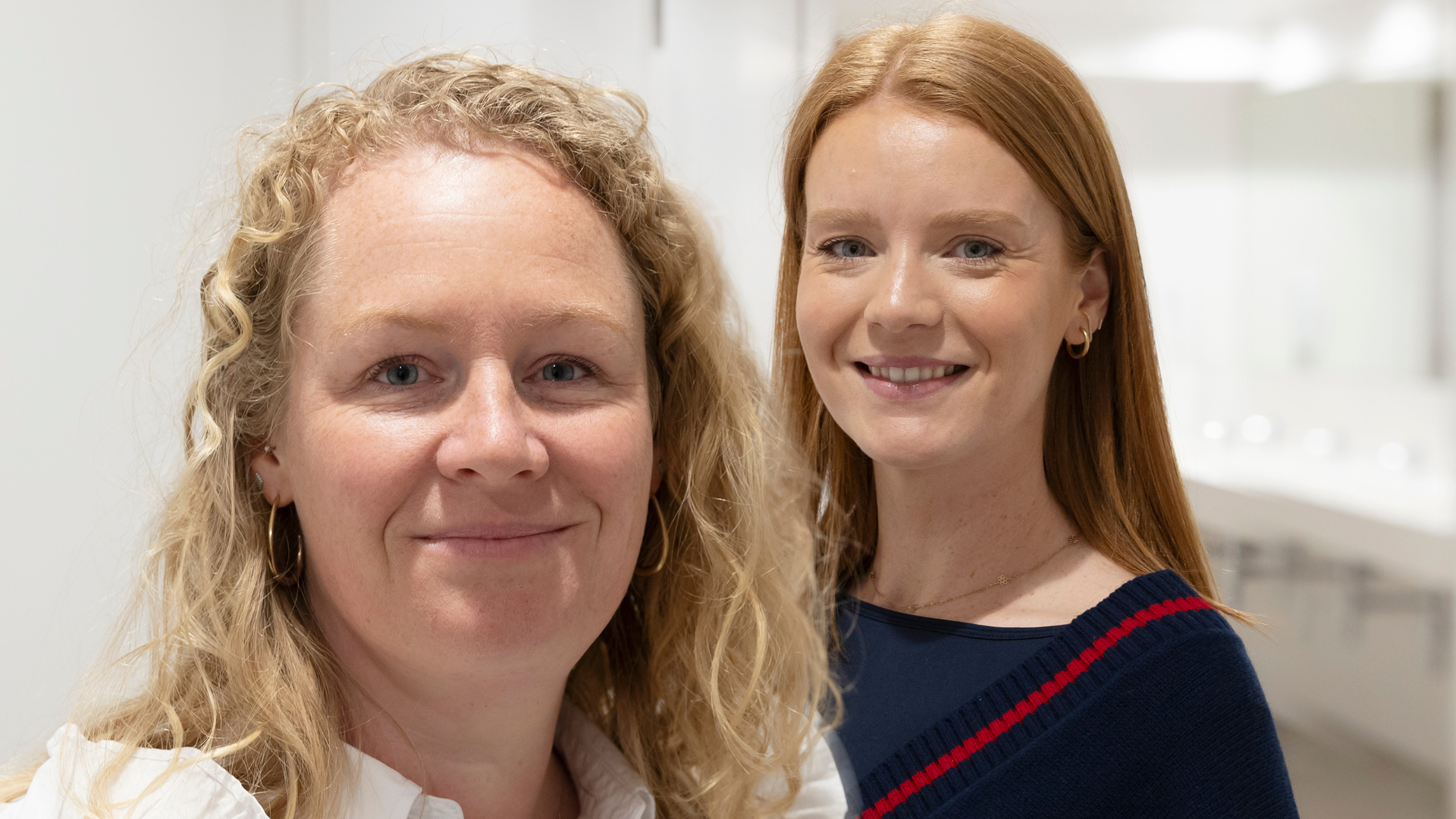
That time of the month and no tampons or sanitary pads with you? Because no woman should have to experience stress over what is essentially a basic necessity, our university became the first in Flanders to provide free menstrual products in all toilet facilities. An initial evaluation shows that the project has been an overwhelming success. ‘Students sometimes literally tell us we saved their day.’
‘Thanks to these free products, I go to campus with far less stress.’ ‘Menstrual products are a basic necessity, just like toilet paper.’ ‘Thank you UAntwerp, this shows you care about your students.’ These are just a few of the positive responses to our university’s initiative to provide free menstrual products in all women’s and gender-neutral toilets.
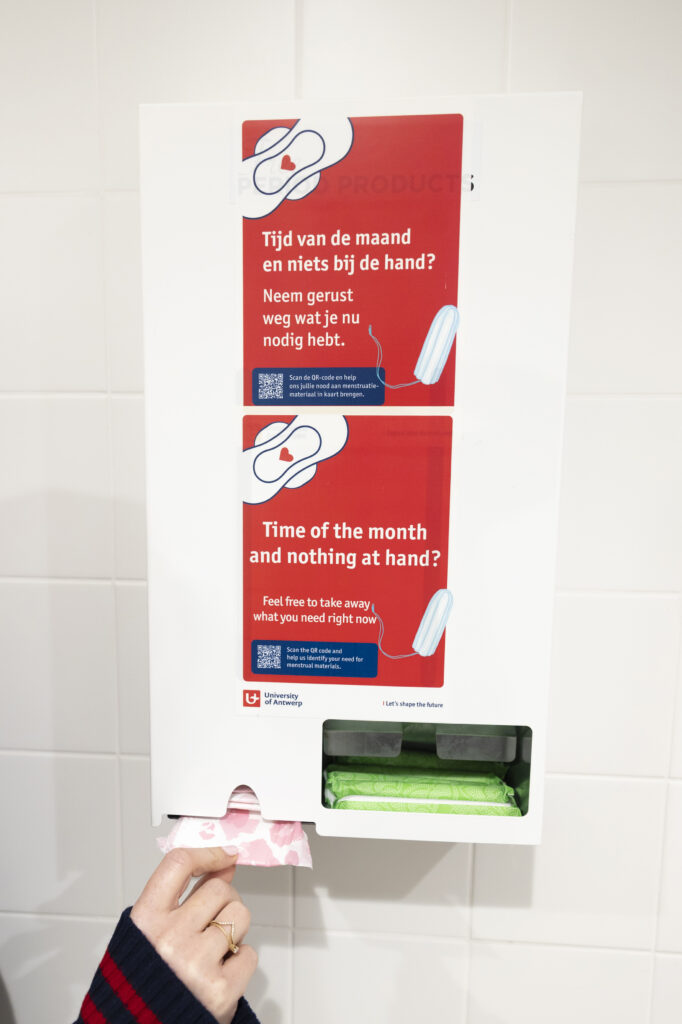
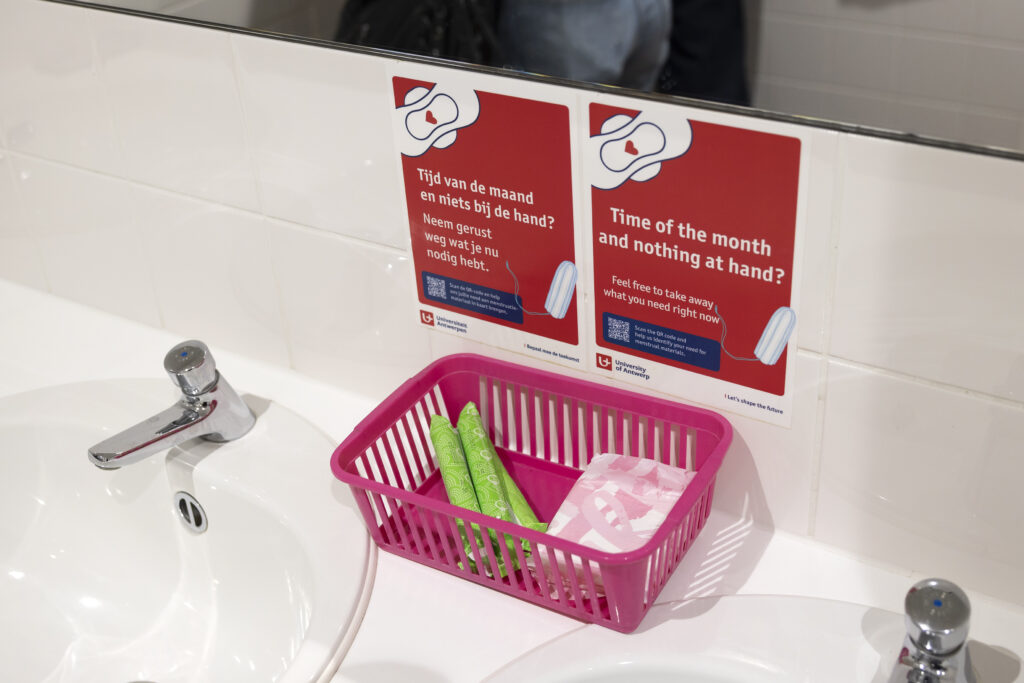
‘Menstrual products aren’t luxury items but a basic necessity, just like toilet paper. With that conviction, but also to tackle period poverty and break the taboo around menstruation, we launched this initiative,’ says Lien Van Cant from Team Diversity and Inclusion. ‘It started as a pilot project, but because of its success we rolled it out across all campuses in early 2023, with dispensers in the busiest toilet facilities and baskets in other locations. Users can give feedback via a QR code.’
Menstrual products too expensive for nine per cent
An extensive evaluation of the project has now been carried out based on around 500 completed surveys. It shows that more than 62% of respondents have used the products at least once. Of those, 81% did so because they had forgotten their sanitary pads or tampons at home. Lien: ‘That’s a very common situation that can lead to stress, reduced concentration or unexpectedly having to return home. In that sense, access to menstrual products is directly linked to equal educational opportunities. A free supply should therefore not be the exception, but the norm. It helps reduce gender inequality while also creating a warm and supportive university environment.’
Nine per cent use the products because it means they don’t have to bring menstrual products themselves. And finally, there is another confronting figure: almost nine per cent do so because tampons or sanitary pads are too expensive for them. This shows that period poverty is also a reality within our university. ‘That figure doesn’t surprise me. We’re seeing a huge increase in students facing financial hardship,’ says Sanne Joostens from the Social Service. There is almost unanimous agreement about the value of the initiative: an overwhelming 98% believe it’s a good idea that should continue.
‘Almost 9% use the free tampons or sanitary pads because they are too expensive for them. Unfortunately we’re seeing a huge increase in students facing financial hardship.’
– Sanne Joostens
Trust as the foundation
The evaluation also looked at the quality and availability of the products. Based on the findings, several adjustments were made, including a product range that’s better suited to users’ needs. Lien: ‘Some people feared that products would “disappear”, but we see that they’re being used responsibly. We start from a position of trust: just as with toilet paper, we don’t judge how much someone uses. The most important thing is that the products are there for those who need them.’
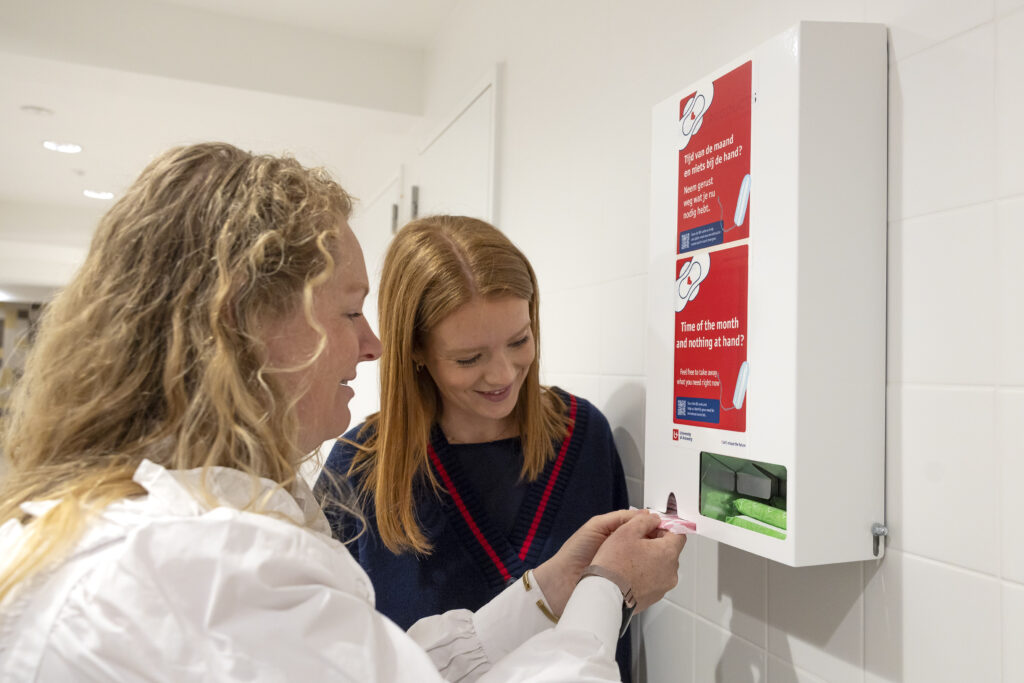
The aim of breaking taboos also appears to have been successful. Lien: ‘As a woman, you’re reminded that you’re certainly not the only person who menstruates. I notice that people talk about it more often these days.’ The initiative has laid the groundwork for a broader commitment to hormonal health and its impact on studying and working. ‘We’ve already had lectures and workshops on the topic, and we’re also going to organise focus groups. Anyone interested in contributing is welcome to contact Team Diversity and Inclusion,’ says Lien.
With its free menstrual products initiative, our university is taking on a pioneering role. Many organisations, including Ghent University, AP University of Applied Sciences and Arts and Thomas More University of Applied Sciences, have already shown interest. ‘We’re often asked: how did you get policy support so quickly?’ Lien explains. Sanne adds: ‘The proposal to make this a structural initiative came from students during a student committee meeting. The policy team immediately said yes; they were very excited about it.’ In the meantime, some universities of applied sciences have also started offering free menstrual products.
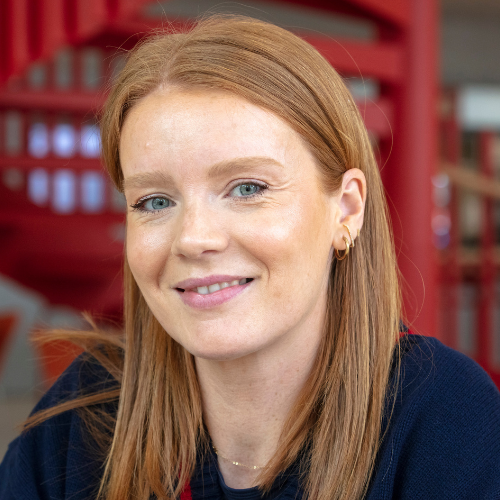
‘The aim of breaking taboos appears to have been successful. As a woman, you’re reminded that you’re certainly not the only person who menstruates. I notice that people talk about it more often these days.’
– Lien Van Cant
Sharing expertise
For the future, the team is looking into options for external sponsorship. And it wants to continue sharing its expertise with other higher education institutions, but also with the City of Antwerp and secondary schools. ‘There’s even more period poverty in secondary schools,’ says Lien. ‘To help address this and raise awareness, we organised another donation campaign. It’s intended for schools where the need is greatest.’
The initiative to distribute free menstrual products is mainly supported by Team Diversity and Inclusion, the Social Service and the Infrastructure Department. Other services have also responded enthusiastically. Sanne: ‘The libraries and the Student Information Point are very willing to help with the donation campaigns. And the cleaning staff deserve all the credit as well: every day, they help turn this initiative into a reality.’
Would you like to help raise awareness of this project? Then feel free to share this article within or beyond our university.