

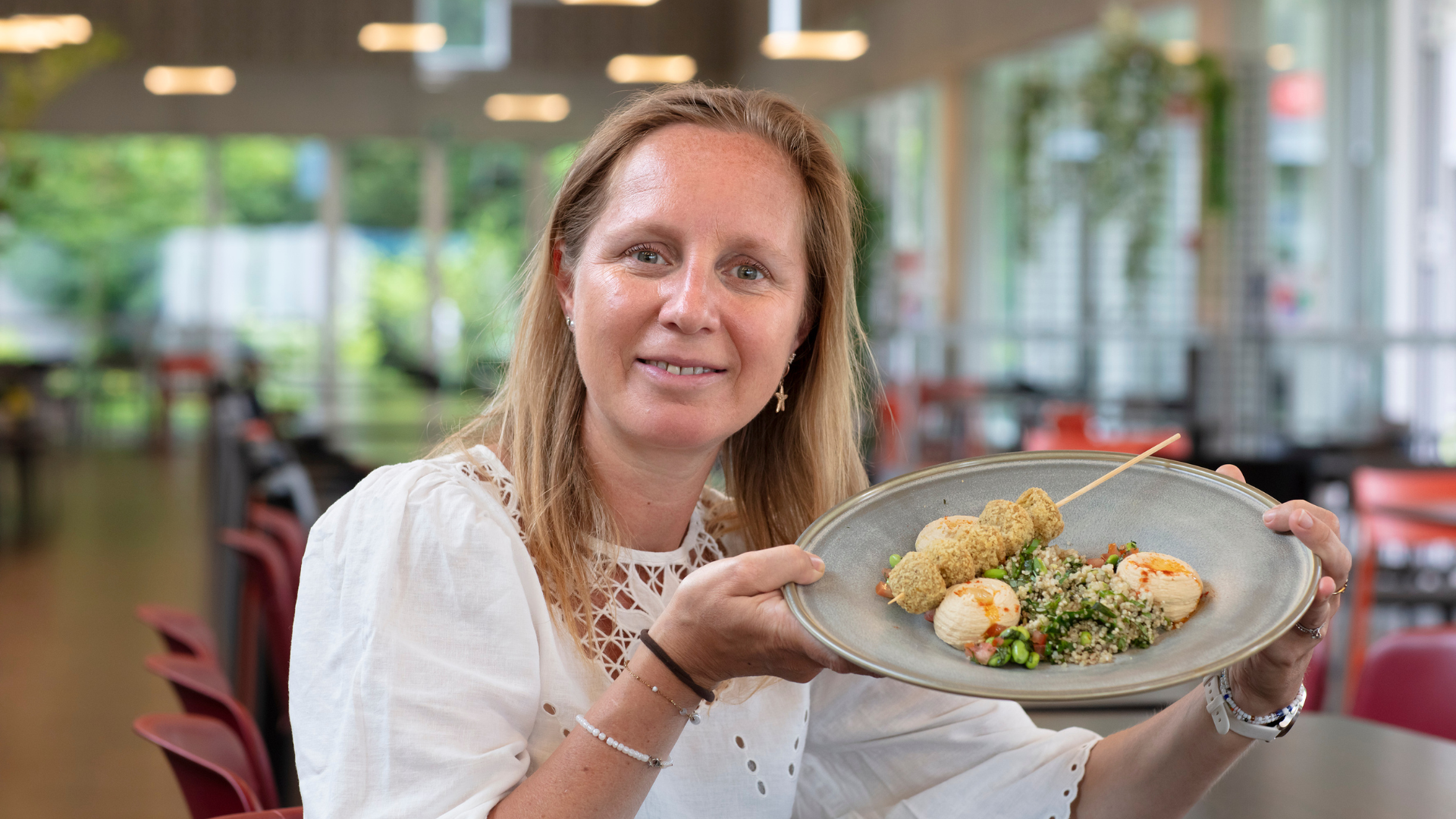
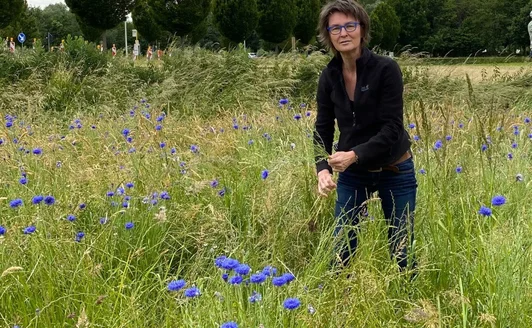
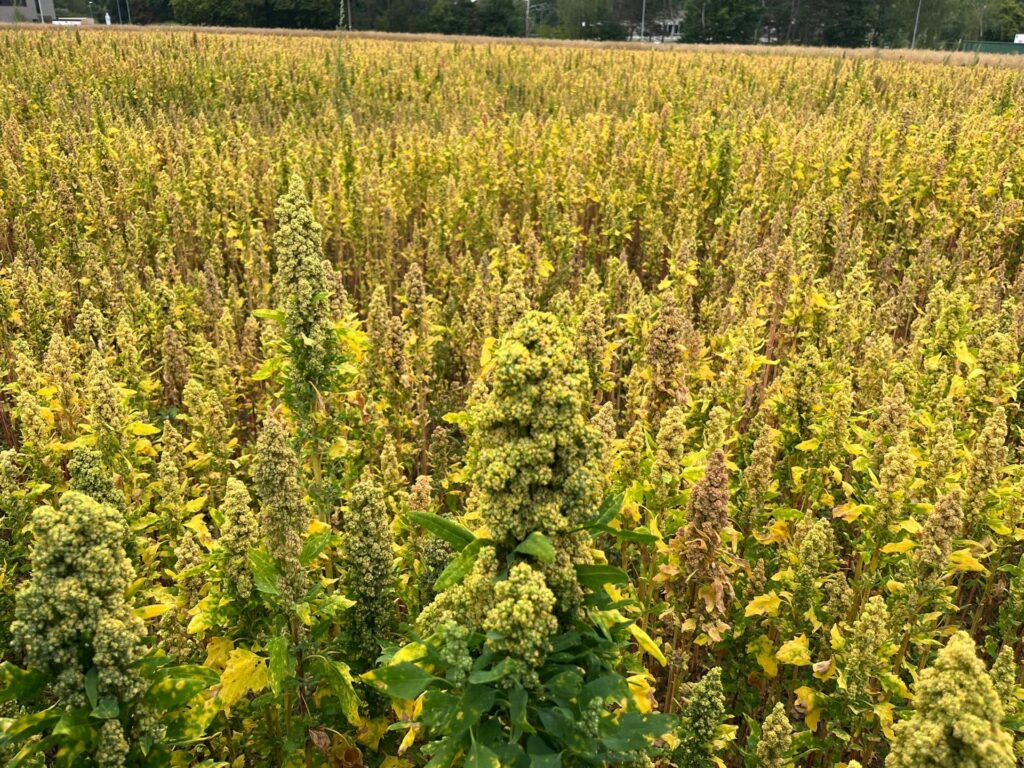
Every day, komida takes steps towards working more sustainably. One great example is its collaboration with a local quinoa producer: Kontichse Korrel. Their fields are located close to Campus Drie Eiken. We spoke to both Magali Hiel, coordinator at komida, and Diane Van Hul, owner of Kontichse Korrel.
Local quinoa on your plate
Why do you choose to work with local products?
Magali: ‘Local products fit perfectly within our sustainability vision. By choosing short supply chains, we reduce transport distances and lower our environmental impact. Local products are also often fresher and more flavourful. At the same time, we support local farmers and contribute to a fair food chain.’
How did this collaboration come about?
Magali: Kontichse Korrel uses fields on Campus Drie Eiken. We got in touch through a professor. As there’s a connection with our own campus, this collaboration made perfect sense for both parties.’
What does this mean in practice for the way you work?
Magali: ‘We think it’s particularly valuable to offer a local product while also supporting a local organisation. The collaboration runs smoothly thanks to short communication lines, reliable deliveries and mutual trust.’
From field to plate: the grower’s story
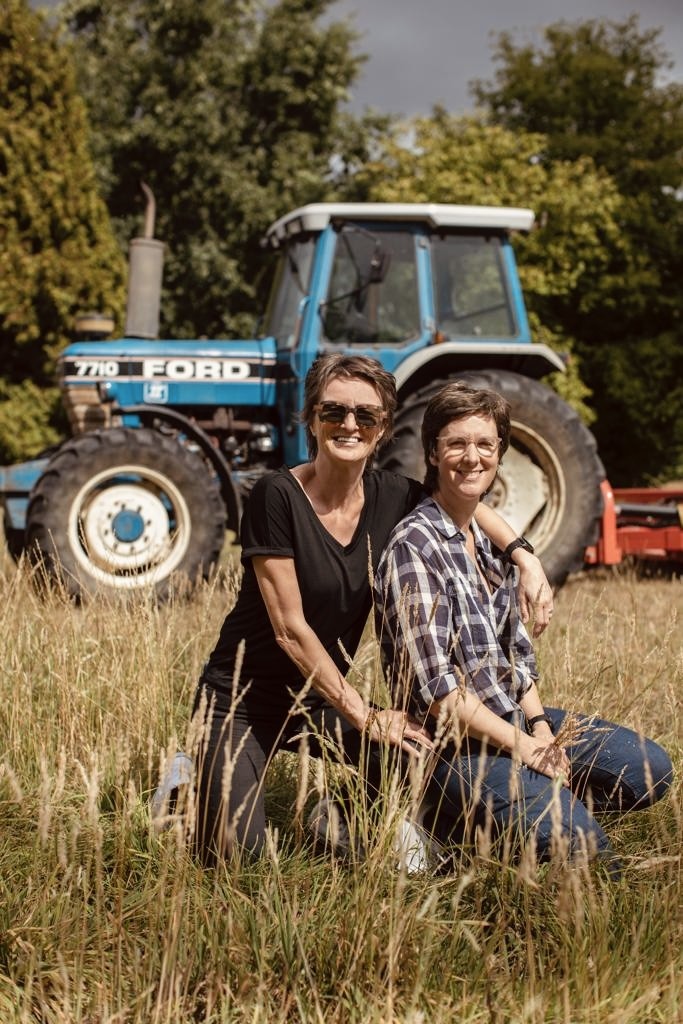
How did you start growing quinoa?
Diane: ‘We were looking for a crop that suits our climate while also responding to the growing demand for sustainable, plant-based food. Quinoa proved to be an interesting option. In addition to quinoa, we grow other crops at Kontichse Korrel, including mustard and poppy seed. We don’t use pesticides or artificial fertilisers.’
Why do you choose to produce quinoa locally?
Diane: ‘Much of the quinoa sold in shops comes from far away, usually South America. By growing it here, we shorten the supply chain and make the product more transparent and sustainable.’
What makes your quinoa different from imported quinoa?
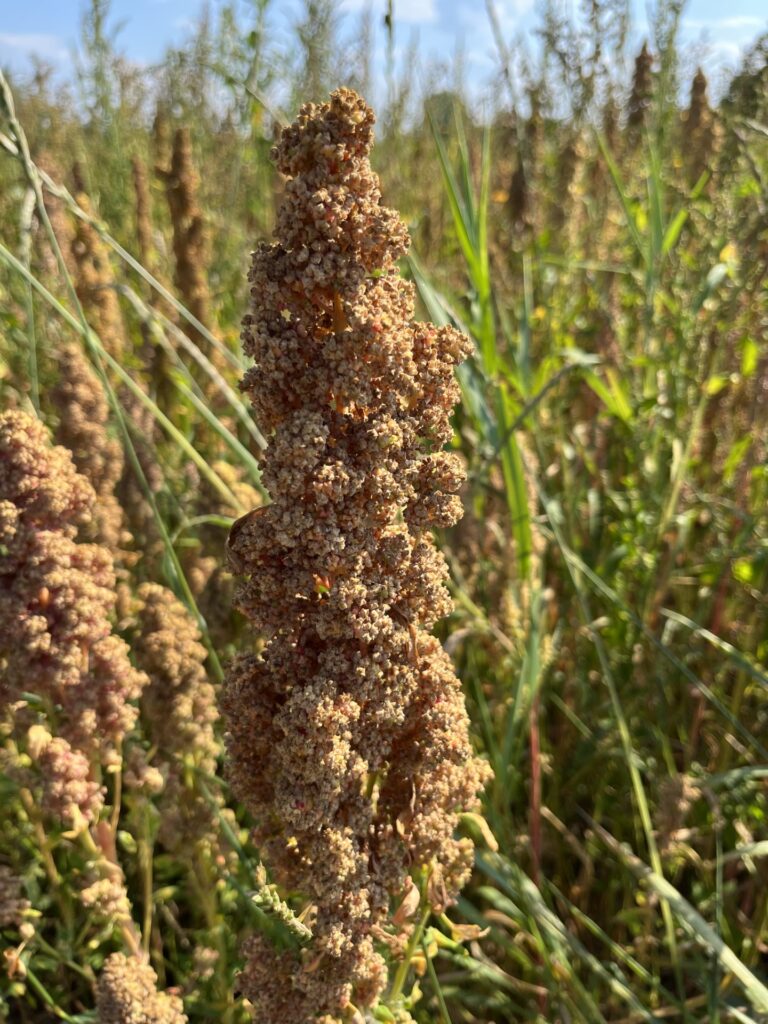
Diane:‘Our quinoa is grown and processed locally. That results in a fresher product with more flavour and a smaller ecological footprint.’
What does a growing season look like?
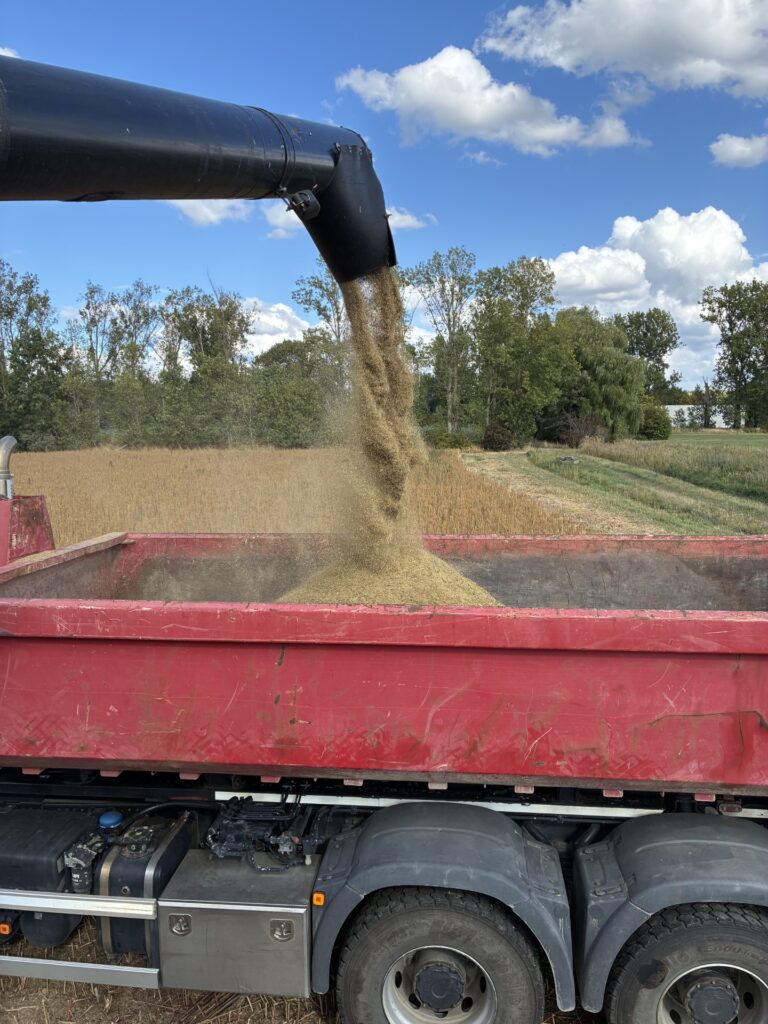
Diane: ‘Quinoa is sown in spring and harvested in August. During the growing season, it’s important to monitor the crop closely, but we don’t intervene.’
What challenges do you face?
Diane: ‘The Belgian climate remains a challenge. Quinoa also requires specific knowledge and care because it’s not a traditional crop. Some years are more difficult than others. Wet years lead to heavy weed pressure, extra work and lower-quality harvests. Even so, we remain firmly committed to growing our crops without spraying, despite the impact this has on yields. We’re fully committed to producing pure, natural and healthy products.’
What does the collaboration with the university mean to you?
Diane: ‘It’s a major added value for us. We can sell our products locally while building a partnership with an organisation that places great importance on sustainability.’
How can you taste the difference at komida?
Which dishes feature quinoa?
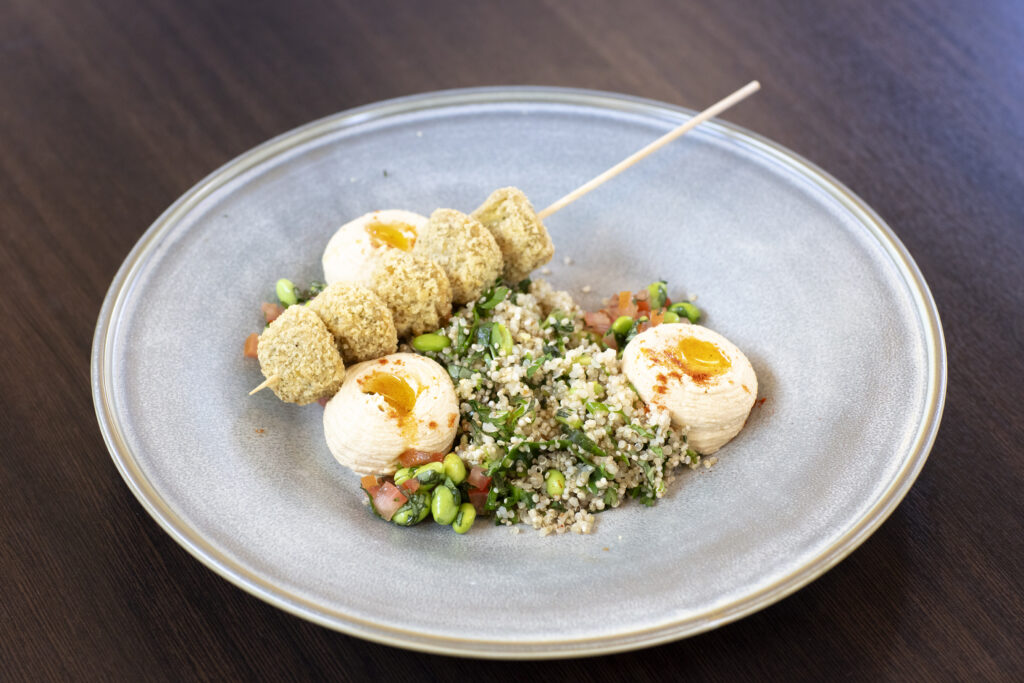
Magali: ‘Quinoa is used in several of our salads, and we also use puffed quinoa as a topping. It adds extra texture and crunch to our dishes. In the new academic year, we want to explore new and creative ways of incorporating quinoa into our range.‘
How do students and staff respond?
Magali: ‘Positively. We see that sustainability is becoming increasingly important to both students and staff. That’s why we also want to make the story behind this quinoa visible in our restaurants.’
Sustainable choices in practice
Is sustainability a deliberate part of your purchasing policy?
Magali: ‘Absolutely. Sustainability is a key pillar of our purchasing policy. Every choice, no matter how small, can have a positive impact. That is why sustainability criteria are also included in our procurement procedures.‘
Do local products outweigh concerns about price and availability?
Magali: ‘Local products can sometimes have a higher purchase price, but they generally offer higher quality in return. At komida, we always strive for the best balance between price and quality.’
Did you know?
- Quinoa isn’t a grain but a seed.
- Quinoa is rich in protein (16%) and fibre, much more so than rice, wheat or spelt.
- Quinoa contains all essential amino acids, making it ideal for muscle development.
- Quinoa is naturally gluten-free.
- Quinoa has a low glycaemic index, which helps support stable blood sugar levels and provides a lasting feeling of fullness.
- Quinoa contributes to a healthy gut microbiome, helps maintain healthy cholesterol levels and reduces stress.
- Quinoa is well suited to dry conditions.
- Quinoa originally comes from South America but is adapting increasingly well to our climate.
- Belgian quinoa requires five times less water than Peruvian quinoa.
Small choices, big impact
With this collaboration, komida wants to show that sustainable choices are both achievable and make a difference. By offering local quinoa, we reduce our ecological footprint, support a local producer and bring a strong sustainability story to our students and staff.
As komida puts it: ‘Sustainability is often found in small choices. But together, those small choices make a big difference.’