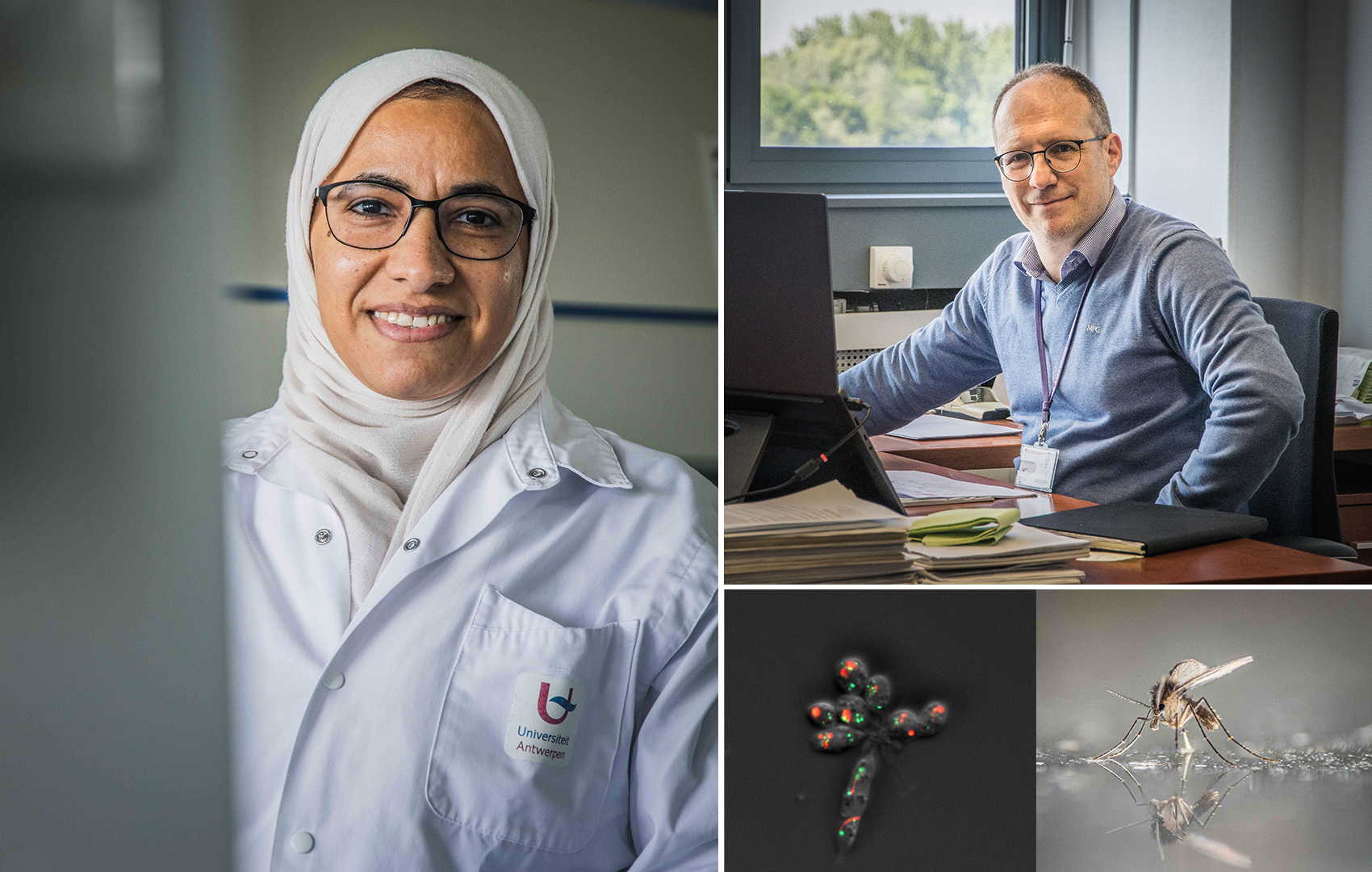
Leishmaniasis is a disease caused by Leishmania parasites, transmitted through the bites of infected sand flies. It can affect internal organs, such as the spleen, liver and bone marrow (visceral leishmaniasis), or the skin and mucous membranes (cutaneous and mucosal leishmaniasis). ‘With no human vaccine available, the search for safer, more effective treatments remains essential’, says postdoctoral researcher Rokaya Ahmed. ‘In this study we investigated how promising new compounds, aminopyrazoles, act against the parasite.’ At the Laboratory for Microbiology, Parasitology and Hygiene, Rokaya works under the supervision of Professor Guy Caljon as part of the Parasitology team.
Recent research by Prof. Guy Caljon and Dr. Laura Dirkx found that Leishmania parasites can enter a dormant state in bone marrow stem cells, making them resistant to drugs. This highlights the need for new treatments to target this phase and improve leishmaniasis management.
Leishmaniasis is a neglected tropical parasitic disease caused by Leishmania species that are transmitted by the bites of female sand flies. The failure rate of leishmaniasis treatment is rising in recent years due to the emergence of resistance to the major antileishmanial drugs. Evaluating the impact of drug resistance on parasite fitness is pivotal for monitoring its development and spread.