
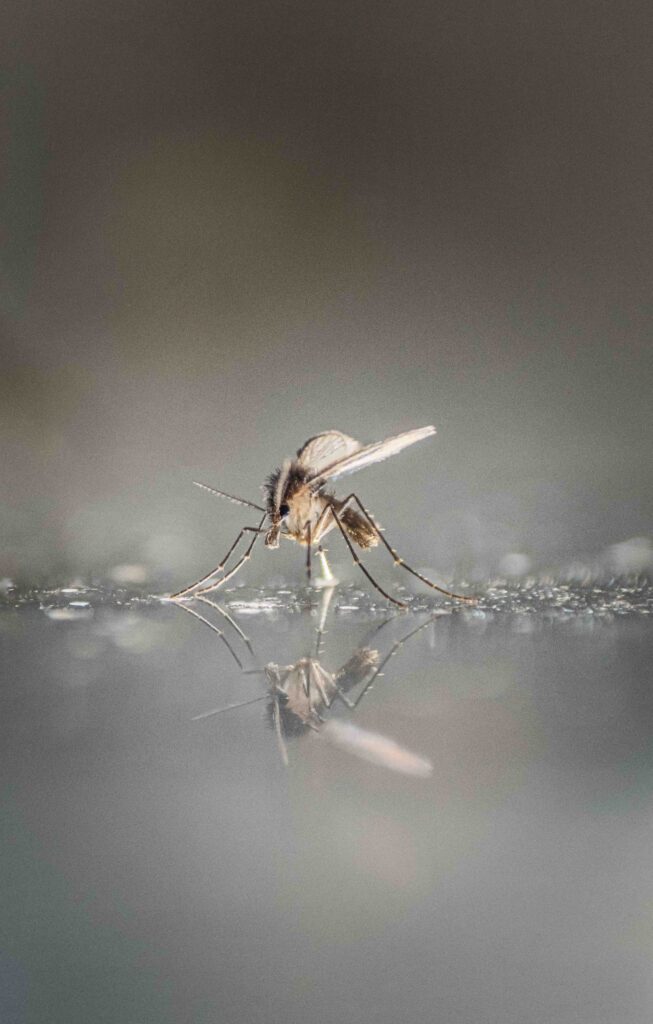
Leishmaniasis is a disease caused by Leishmania parasites, transmitted through the bites of infected sand flies. It can affect internal organs, such as the spleen, liver and bone marrow (visceral leishmaniasis), or the skin and mucous membranes (cutaneous and mucosal leishmaniasis). Despite the serious impact of leishmaniasis, treatment options remain limited, and existing drugs cause significant side effects.
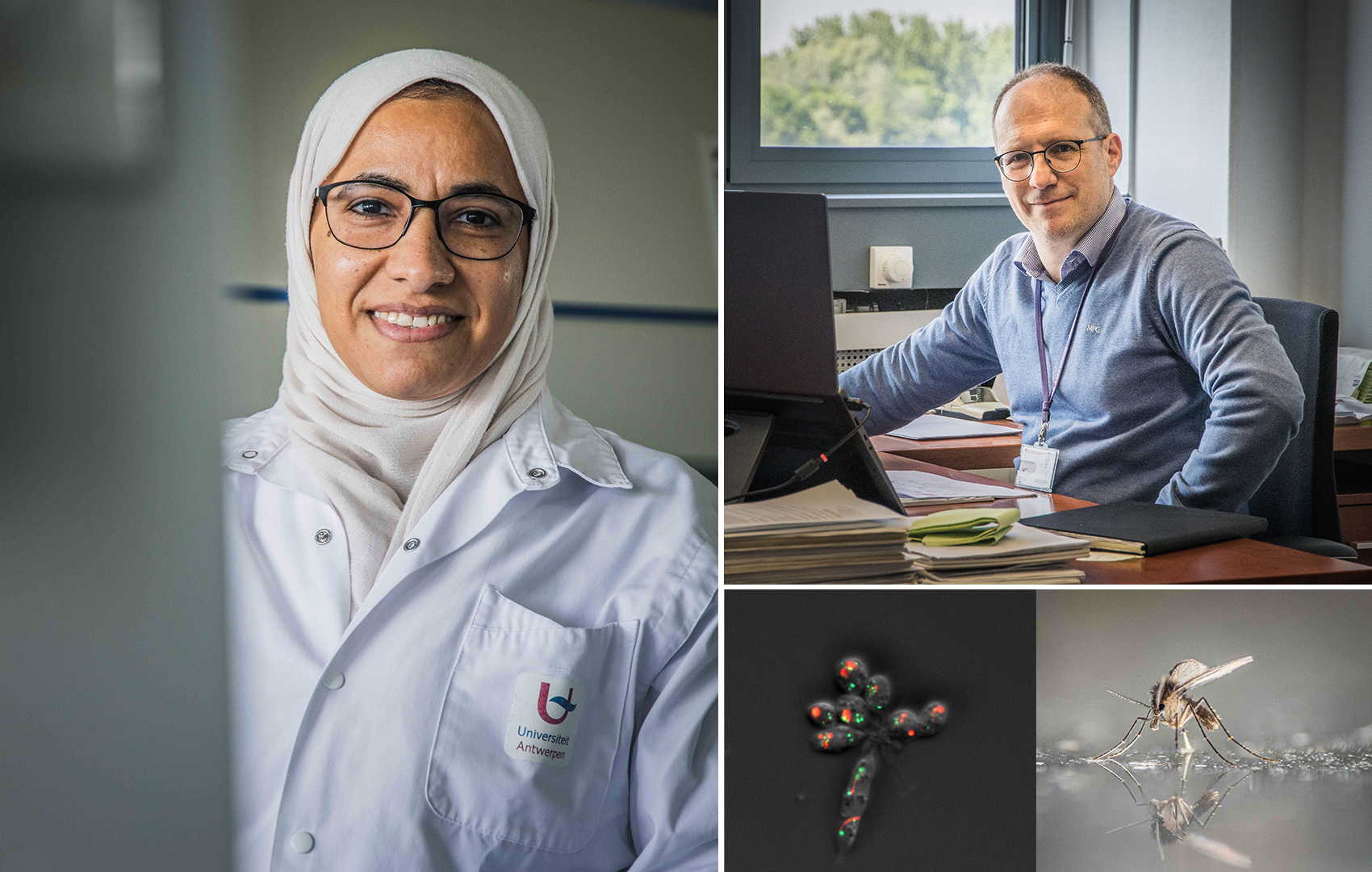
‘With no human vaccine available, the search for safer, more effective treatments remains essential’, says postdoctoral researcher Rokaya Ahmed. ‘In this study we investigated how promising new compounds, aminopyrazoles, act against the parasite.’ At the Laboratory for Microbiology, Parasitology and Hygiene, Rokaya works under the supervision of Professor Guy Caljon as part of the Parasitology team. The study is published in Nature Communications.
How do the aminopyrazoles work?
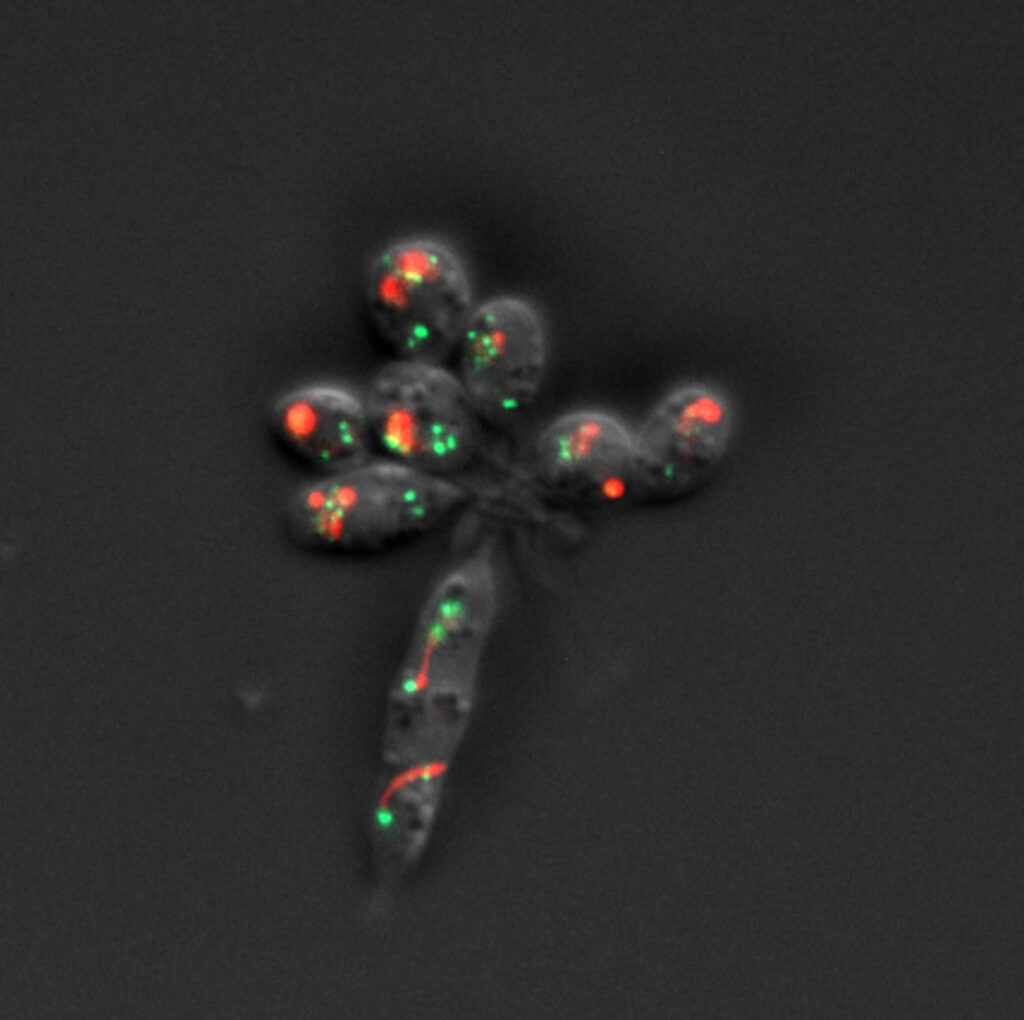
‘Our study provided genetic and biochemical proof that aminopyrazoles target the essential protein LINF_180011100. This protein functions in the parasite’s endosomes, compartments that act like traffic lights, orchestrating the movement of molecules to the right places inside the parasite. Functions that are crucial for the survival of the parasite.
We found that mutations induced by mutagenesis or introduced by site-directed mutagenesis, affecting the amino acid His594, can make the parasite resistant to these compounds. We further confirmed the drug target based on three major observations: First, parasites that produced large amounts of a mutated version of LINF_180011100 become more resistant. Second, this mutation prevented aminopyrazoles from binding to their target inside the cells. Third, the lead aminopyrazole compound DNDi-5561, binds specifically and dose-dependently to the protein’s C-terminal FYVE domain.
This FYVE domain normally helps the protein attach to cellular membranes via phosphatidylinositol 3-phosphate (PI3P), which is abundant on endosomal vesicles. Proteins containing FYVE domains play an important role in endosome formation, fusion and maturation, thereby regulating endocytosis and intracellular trafficking. Aminopyrazoles disrupt this critical protein function, thereby compromising the survival of the Leishmania parasite.’


What methods did you use?
‘We implemented several technologies and approaches: chemical mutagenesis to generate resistant strains, drug susceptibility determinations, gene-editing technologies, flow cytometry, fluorescence and confocal microscopy, recombinant protein production, and grating-coupled interferometry. This multidisciplinary work is the result of a fruitful collaboration between the University of Antwerp and the Drugs for Neglected Diseases initiative, Université Laval and the VIB Proteomics Core.’
What are the next steps for this study?
‘We aim to develop a high-throughput biophysical screening assay based on the PI3P/FYVE interaction: the association of LINF_180011100 with endosomes, using a phosphoinositide–protein overlay approach. This will help in the discovery of new antileishmanial compounds acting via a similar mechanism. This may also offer opportunities to tackle other parasitic diseases.’
Affiliations: 1Laboratory of Microbiology, Parasitology and Hygiene (LMPH), Infla-Med Centre of Excellence, University of Antwerp, Wilrijk, Belgium. 2Faculty of Veterinary Medicine, Assiut University, Assiut, Egypt. Funding and support: Rokaya Ahmad was funded by a full scholarship from the Ministry of Higher Education of the Arab Republic of Egypt (GM02-2019). This research is supported by the University of Antwerp, Fonds Wetenschappelijk Onderzoek Vlaanderen (G065421N and G0A5624N) and the Drugs for Neglected Diseases initiative. Work at Université Laval was supported by a Canadian Institutes for Health Research Foundation Grant (FND167283).