

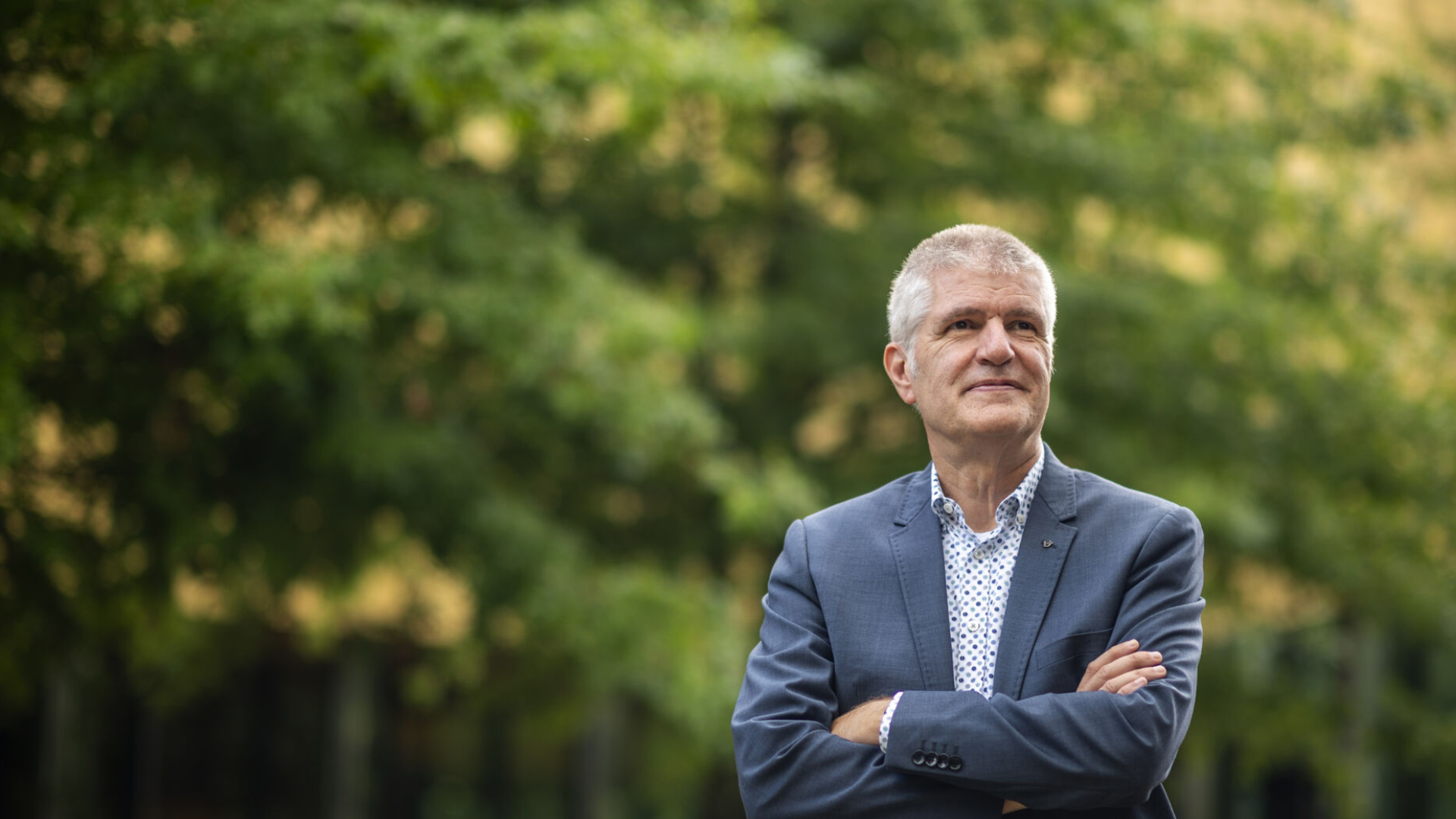
As of this academic year, smoking is no longer permitted anywhere on our campuses, indoors or outdoors. This makes us the first university in Belgium with such a comprehensive anti-smoking policy, stricter than what the government imposes. ‘A smoke-free generation is what we should all continue to strive for,’ says Professor Filip Lardon, head of the Center for Oncological Research (CORE) and dean of the Faculty of Medicine and Health Sciences.
Today, one in four Belgians still smoke. An astonishing figure when you consider that in our country alone, almost two people die from smoking every hour. Because we, as a university, have an exemplary role and want to create a healthy learning and working environment, a new smoking policy is in place as of this academic year. Smoking is no longer allowed anywhere on our campuses: not inside, but also not in the car parks and footpaths, for example. Rather than imposing sanctions, our university aims to foster a new mindset.
‘No, the proposal didn’t just come from me,’ laughs Professor Filip Lardon, ‘although I am part of the committee on health & safety and protection at work, which devised the new smoking policy. And of course I fully support this. As a university, we should set a good example and denormalise smoking as much as possible.’
As a university, we should set a good example and denormalise smoking as much as possible. Therefore, smoking is no longer allowed anywhere on our campuses: not inside, but also not in the car parks and footpaths. We aim to foster a new mindset.
No pointing the finger
Filip Lardon finds it hard to fathom that 60 years after it became known that smoking kills, cigarettes are still firmly entrenched in our culture. Through lectures, books and media appearances, he continues to campaign relentlessly against smoking. In doing so, he wants to reach young people in particular: if we can keep them away from cigarettes, smoking as an unhealthy habit will naturally die out and that smoke-free generation will one day become a reality.
Yet he doesn’t want to point the finger at smokers. He has every sympathy for all those people who, often under the influence of smoking friends, once became addicted. ‘I don’t want to come across as someone who bans everything. Because no, I’m not without sin either. For one thing, I find it hard to resist sweets,’ admits Professor Lardon. ‘But the reality is that in our oncology clinic, we have to give brutal diagnoses to lung cancer patients every day. Those people and their families are invariably devastated and want nothing more than to turn back the clock. But unfortunately that’s not possible.’
Addictive effect
The fact that smokers find it so difficult to give up cigarettes has everything to do with the addictive nature of nicotine. ‘Nicotine is amongst the top three most addictive drugs.’ Filip Lardon explains. ‘This is partly to do with the happiness chemical dopamine, which we naturally produce and which stimulates the reward centre in the brain, for example when we’ve had a nice meal or receive a compliment. Nicotine provides a boost of dopamine. But unfortunately, our brains respond by making sure we become less sensitive to it. Consequence: you start smoking more and more to achieve the same effect and your brain continues to rely on the same compensation mechanism. So you get into a negative spiral and within weeks you’re hooked.’
Unfortunately, the way back takes much longer: when you quit smoking, it usually takes months or even years for your brain to regain the same level of dopamine sensitivity. That explains why smoking is so addictive. ‘Only one smoker in five manages to quit relatively quickly,’ Filip Lardon says.
‘In just a few weeks, you can become addicted under the influence of the dopamine released by nicotine. Unfortunately, the way back takes much longer. Still, quitting always makes sense. The lung cells will repair the DNA damage caused by smoking.‘
– Filip Lardon
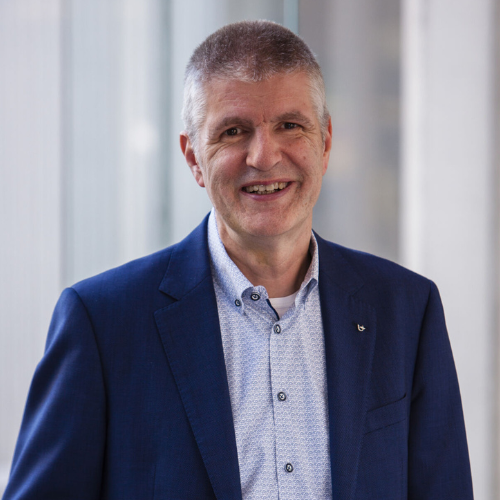
The dangers of smoking are widely known. To begin with, it very much increases the risk of lung cancer: almost 90 % of lung cancers result from tobacco use. In addition, smoking is much more likely to cause cardiovascular disease – with twice the risk of heart attack, for example – chronic obstructive pulmonary disease and 15 other cancers. It is just a sample of the dozens (!) of conditions you are at higher risk for as a smoker. Consequently, a smoker has a life expectancy almost 10 years shorter than a non-smoker.
Health risk research
Scientists, meanwhile, keep finding new negative effects. For example, a recent Norwegian study shows that if boys smoke before the age of 15, it can shorten the life expectancy of their eventual offspring. ‘Very shocking indeed,’ says Professor Lardon. ‘The explanation is that smoking causes epigenetic damage to sperm cells or, in other words, negative changes in the DNA operating system. Unlike genetic mutations, that kind of damage is transmissible through sperm cells.’
But there’s also good news: we’ve recently learned that the DNA damage that smoking causes in the lungs, responsible for the greatly increased risk of lung cancer, is reversible even after many years of smoking. Filip Lardon: ‘The lung cells try to repair the damaged DNA. They also succeed in doing so, although it can take 10, even 15 years. But it shows that quitting smoking always makes sense.’
Is vaping the solution?
And what about vaping? At the time, the e-cigarette was marketed as a less harmful alternative to smoking, but scientists soon came to a different view. Filip Lardon paints a nuanced picture. ‘If I see an adult vaping, I’m still sort of okay with that. In any case, that person isn’t smoking and is at less risk with vaping in the end. But the fact that young people have now taken to vaping en masse is particularly worrying. Because yes, vaping is harmful too: e-liquids are a cocktail full of harmful chemicals and vaporising releases additional harmful substances. Very recent research shows that vapours from a vape can cause DNA damage in laboratory animals. Therefore, the chances that we’ll eventually find a link to lung cancer are very high.’
‘If I see an adult vaping, I’m still sort of okay with that. In any case, that person isn’t smoking and is at less risk with vaping in the end. But the fact that young people have now taken to vaping en masse is particularly worrying.’
Exactly how harmful vaping is may not be fully understood for decades. But it has already been determined that vaping also makes you dependent on nicotine and that it’s very addictive. Whether it’s also a stepping stone to ‘real’ smoking is unproven for now.
A few weeks ago, Minister for Public Health Frank Vandenbroucke announced that he wants to ban flavours in vapes, with the exception of tobacco flavouring. Professor Lardon chaired the advisory group within the Superior Health Council of Belgium that looked into that issue and in that capacity advises Minister Vandenbroucke. Filip Lardon: ‘It’s downright criminal for manufacturers to try to tempt children with child-friendly, even tempting flavours like “pancake” and “grandma’s apple pie”. This is how they try to get large numbers of young people hooked on nicotine. A ban of all such flavours, preferably at European level, is therefore a good thing.’
Battle on two fronts
Meanwhile, Professor Lardon continues to fight a battle on two fronts, against the ugly beast that is lung cancer on the one hand, and against smoking and vaping on the other. ‘Of course, with our oncology centre, we continue to do everything possible to treat lung cancer better, investing a great deal of effort. For example, we’re currently researching new immunotherapies. But at the same time, we’re tired of fighting the symptoms instead of the cause. Without smoking, we’d see 80 to 90 % fewer lung cancers. That’s why I keep pleading: please just stop smoking or vaping, and don’t start in the first place. Let’s continue to spread that message on our smoke-free campuses as well.’
Do you smoke? Have you quit? Or are you thinking about it?
Is quitting smoking one of your New Year’s resolutions for 2026? Then Filip Lardon’s recent book is definitely worth a read.

Alles wat je moet weten over (stoppen met) roken en vapen (Two deaths an hour. Everything you need to know about (quitting) smoking and vaping)
We’re giving away five free copies to those who answer the question: “What would quitting smoking mean for you?”
Send your answer before 31 January to pintra@uantwerpen.be.
A follow-up book is also available, aimed at young people has now also been published: Game over. Verspeel je leven(s) niet met #roken en #vapen (Game over. Don’t waste your life(s) with #smoking and #vaping). All info at www.borgerhoff-lamberigts.be/auteurs/filip-lardon.
Smoke-free and vape-free campuses
We kindly ask everyone to continue respecting the smoking and vaping ban on our campuses. Smoking is also not allowed within 10 metres of building entrances and exits. Need a smoke break? Please take a short walk outside the campus boundaries. And remember to be considerate: don’t leave cigarette butts on the ground. A helpful tip — use a portable pocket ashtray. You can request one by emailing milieudienst@uantwerpen.be. Thank you for being mindful of each other and of our shared environment.
Learn more about our smoke-free campuses at uantwerpen.be/smokefree