


What most students take for granted – buying that hefty course book, ordering a cheese sandwich with all the trimmings, going to a party now and then – is a real luxury for others, or simply out of reach. Justa, Elien (*), Iben and Bohdana share their experiences of studying in difficult circumstances. ‘Student life? No time or money for that.‘
More and more students are struggling to pay for their studies. Every year, the Social Service sees the number of applications for financial support increase. Behind those figures are often life-changing events: students who unexpectedly lose financial or family support, face an acute crisis or even temporarily find themselves without a roof over their heads.
‘Through the Students in Need Fund, we’ve been supporting students facing difficult circumstances for some time,’ says Sanne Joostens, coordinator of the Social Service. ‘This autumn, we’re launching the subproject Warm Support for Students in Crisis. Through this initiative, the Social Service aims to provide students in acute need with immediate practical and financial support, such as food, personal care products or additional guidance. This means they receive help at the moment they need it most. Under existing procedures, that support is not immediately available. This rapid assistance helps students get through a difficult period while we work towards a sustainable solution. It adds another layer of warmth and humanity to the support we already provide.’
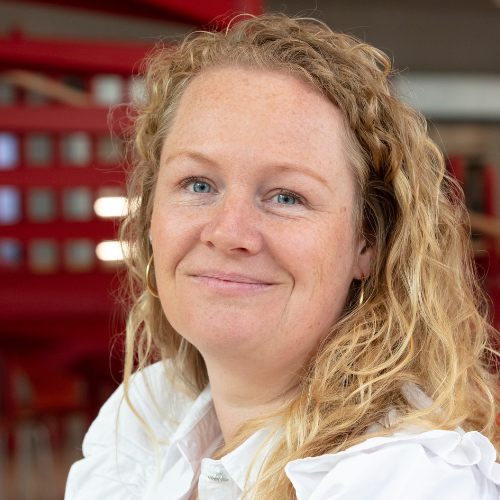
‘Through this initiative, the Social Service aims to provide students in acute need with immediate practical and financial support, such as food, personal care products or additional guidance. This means they receive help at the moment they need it most.’
– Sanne Joostens, coordinator of the Social Service
The students’ experiences show just how much of a difference swift help can make. Every request for support reflects not only a difficult situation, but also a story of perseverance, resilience and hope. Four students share their stories.
Justa: ‘I’ve often felt very lonely’
Justa (23) is in the first year of the Master of Product Development.
‘I never thought I’d get this far. I always knew that if I wanted to continue my education, I’d have to do it on my own. I come from a difficult home situation, with little money or stability. Amongst other things, this meant I had to take on responsibility for my younger sister at an early age. After secondary school, I worked for two years to build up some savings.
Contacting the Social Service at the start of my studies felt quite daunting, as did that whole period. Everything was new, the university was new, and there was a lot of tension at home. At the Social Service, I found someone willing to listen, which made me feel less alone. I received a social allowance on top of my study grant, qualified for a komida allowance and could see a student psychologist free of charge.
From my second year onwards, I started working part-time again. That year, I also moved into student accommodation to get away from my home situation and focus fully on my future. It was a difficult decision, but the right one. Eventually, I was able to get an affordable room through the university.
Especially at first, I struggled to connect with other students in my programme, partly because our lives were so different. Every day was a struggle to stay in university, while they took it all for granted. Fortunately, I did find my feet in a few societies, such as the LGBTQ+ student association, and at CABIN, a welcoming place for students to meet. Today, I feel much stronger. Things are more stable and I no longer feel as though I’m constantly fighting. And I’ve met some lovely people in my field of study.
If there’s one thing I’ve missed over the past few years, it’s role models. As a first-generation student, I often felt very lonely. I hope sharing my story can give hope to other young people in similar situations.’
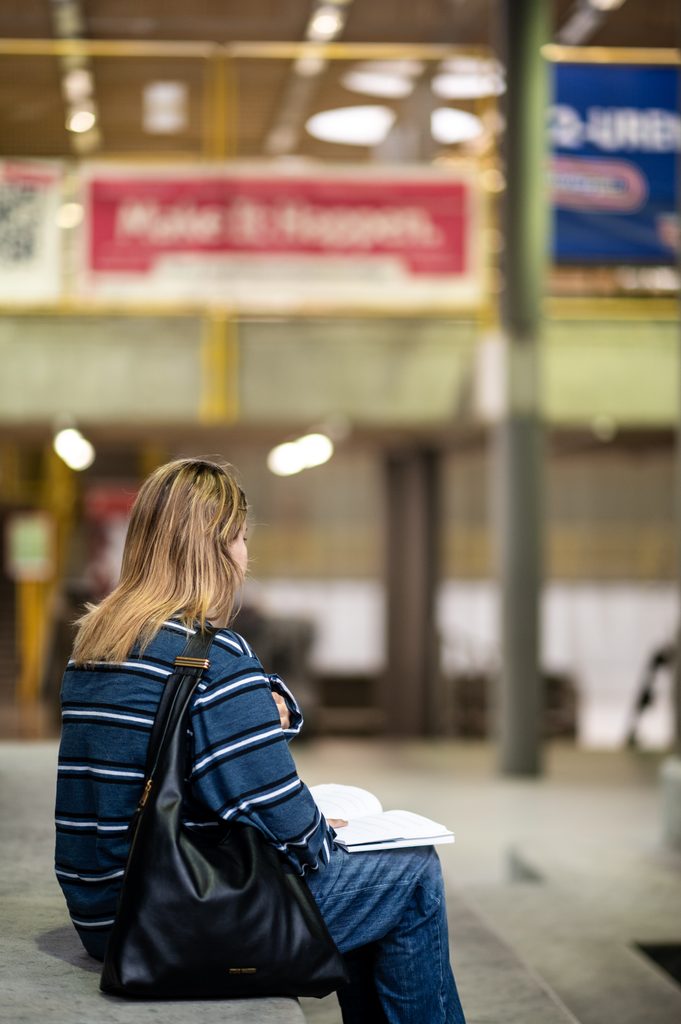
‘My situation is complicated: on paper, I can turn to my parents for support, which meant I wasn’t entitled to a government study grant. In practice, though, I pay for almost everything myself.‘
– Elien, 23 years old, first year Master of Product Development
Elien: ‘Financial stress after I suddenly had to leave home’
Elien (23), a master’s student in Linguistics and Literary Studies, had to become independent early on. Her parents contribute towards her housing costs, but she pays for everything else herself.
‘My home situation isn’t ideal. I had to leave home very suddenly. That caused a lot of financial stress, especially in my first year. My situation is complicated: on paper, I can turn to my parents for support, which meant I wasn’t entitled to a government study grant. In practice, though, I pay for almost everything myself.
To qualify for a study grant after all, I applied for independent student status. As you have to earn enough to qualify, I worked as much as twenty to thirty hours a week in the second year of my bachelor degree. It was so demanding that I couldn’t cope, even having panic attacks during class. My lecturers were very understanding and now know about my situation. That means they sometimes make an exception if I can’t finish an assignment on time. Their support means a lot.
Turning to the Social Service for extra support was very difficult for me. As my parents still support me to some extent, I wondered whether I was entitled to it. But because they took my actual circumstances into account, it was eventually sorted out. I don’t mind not being able to afford much. The only thing that hurts is being one of the few students who can’t go on an Erasmus exchange. Recently, I was offered the chance to spend a few weeks doing fieldwork in Colombia. Financial support would be available for that, but unfortunately it might not be arranged in time.
A difficult home situation is about so much more than money. Always having to manage everything yourself, without your parents’ support, is quite lonely. But I’ve found my bearings now, and the balance between work and study has improved too. My study programme is really interesting, which helps me keep going. I’ll land on my feet.’
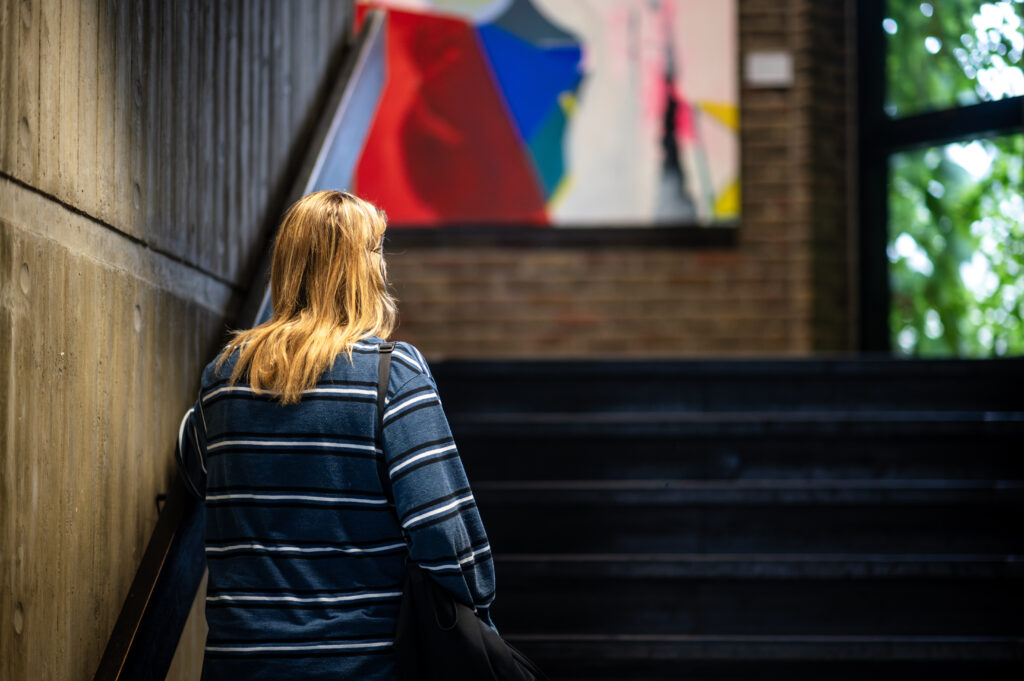
Iben: ‘A night shift after a long day at university’
Iben (23) completed a Master of Architecture last year, despite extremely difficult circumstances.
‘I couldn’t rely on financial support from my parents. I did live at home for the first four years of my studies, which made a big difference to my expenses. But architecture is a very expensive study programme. You need a good laptop, and materials are a constant expense. So I had to work. For four years, I worked three night shifts a week at a petrol station. Those were tough days. I was so driven that I’d be on campus from the morning until 10 p.m., and my night shift started at 4 a.m. Cooking for yourself to save money just isn’t an option then. Even so, I completed my degree within the standard timeframe.
I didn’t have a student life: no time and no money. In my first year, I hit it off with a small group of students in my cohort, but if you always turn down every activity, you soon find yourself on the outside. Occasionally, an old friend would drop by while I was working on a scale model: that was my social life.
Because there was eventually a lot of tension at home, I moved into student accommodation in my final year. Only then did I ask for support. That was a huge step for me, because asking for financial help had always been a major taboo at home. But without that extra support, I would have had to give up my studies.
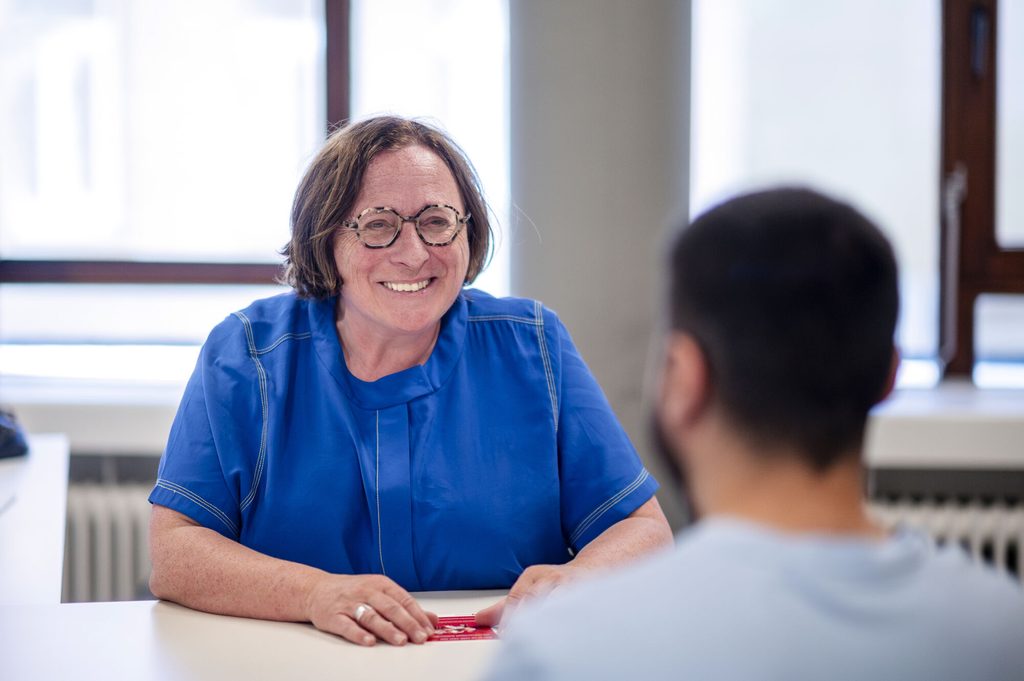
‘Going to the Social Service was a huge step for me, because asking for financial help had always been a major taboo at home. But without that extra support, I would have had to give up my studies’
– Iben, 23 years old, graduated as Master of Architecture last year
The past few years have helped shape who I am. I’ve learnt to persevere and work incredibly hard. But I would much rather things had been different. That’s why I’ve made a conscious decision to share my story: to help break the taboo and show others that help is available.’
Bohdana: ‘The difference between me and other students can be painful’
Bohdana (23) is in her third year of Interior Architecture. Without support, she wouldn’t be able to study, she says. ‘My mum is a single parent and has always worked hard to provide for us. It means so much to her that I can pursue my dreams despite our difficult financial situation. But my younger brother’s health problems brought additional expenses, and it became increasingly difficult to pay for my studies. That’s why, for the past three years, I’ve been paying all my own living and study expenses by working alongside my studies.
Last summer, I was worried about my study grant. I’m combining the second and third years of my bachelor degree, and a new rule about credits meant I was at risk of losing my entitlement. So I asked the Social Service for advice. That was a very difficult conversation because I was afraid I wouldn’t be able to finish my studies. Fortunately, I was helped by wonderful people who showed so much empathy. That meant the world to me. In mid-September, I heard that it would all be sorted out.
‘I asked the Social Service for advice. Fortunately, I was helped by wonderful people who showed so much empathy.
It’s not just about a lack of money, but also about uncertainty and stress. That’s why we must keep striving for equal educational opportunities.‘
– Bohdana, 23 years old, studies Interior Architecture
Because I have to be very careful with money, I rarely go out for food or drinks with other students. The difference can be painful. While others talk about the trips they took during the holidays, all I can do is listen and say nothing. Because all I did was work. Combining study and work is stressful too. If I can’t work for one or two weekends during the exam period, I know money will be tight the following month.
It’s difficult for outsiders to understand what students like me go through every day. It’s not just about a lack of money, but also about uncertainty and stress. That’s why we must keep striving for equal educational opportunities. I hope other students never have to feel as disadvantaged or uncertain as I sometimes have.’
Would you like to support students who are struggling financially?
You can do so through the project Warm Support for Students in Crisis, a subproject of the Students in Need Fund. The project supports students who are unexpectedly confronted with financial difficulties, the loss of family support or other major life challenges. Through this fund, we can provide rapid assistance when the need is greatest.
You can support the fund with a donation or by organising your own fundraising initiative, on your own or together with colleagues, friends or family. Every contribution helps these students continue their studies.
* Not her real name
The photographs accompanying this article are for illustrative purposes only. The students shown are not the people featured in the testimonies in this article.