

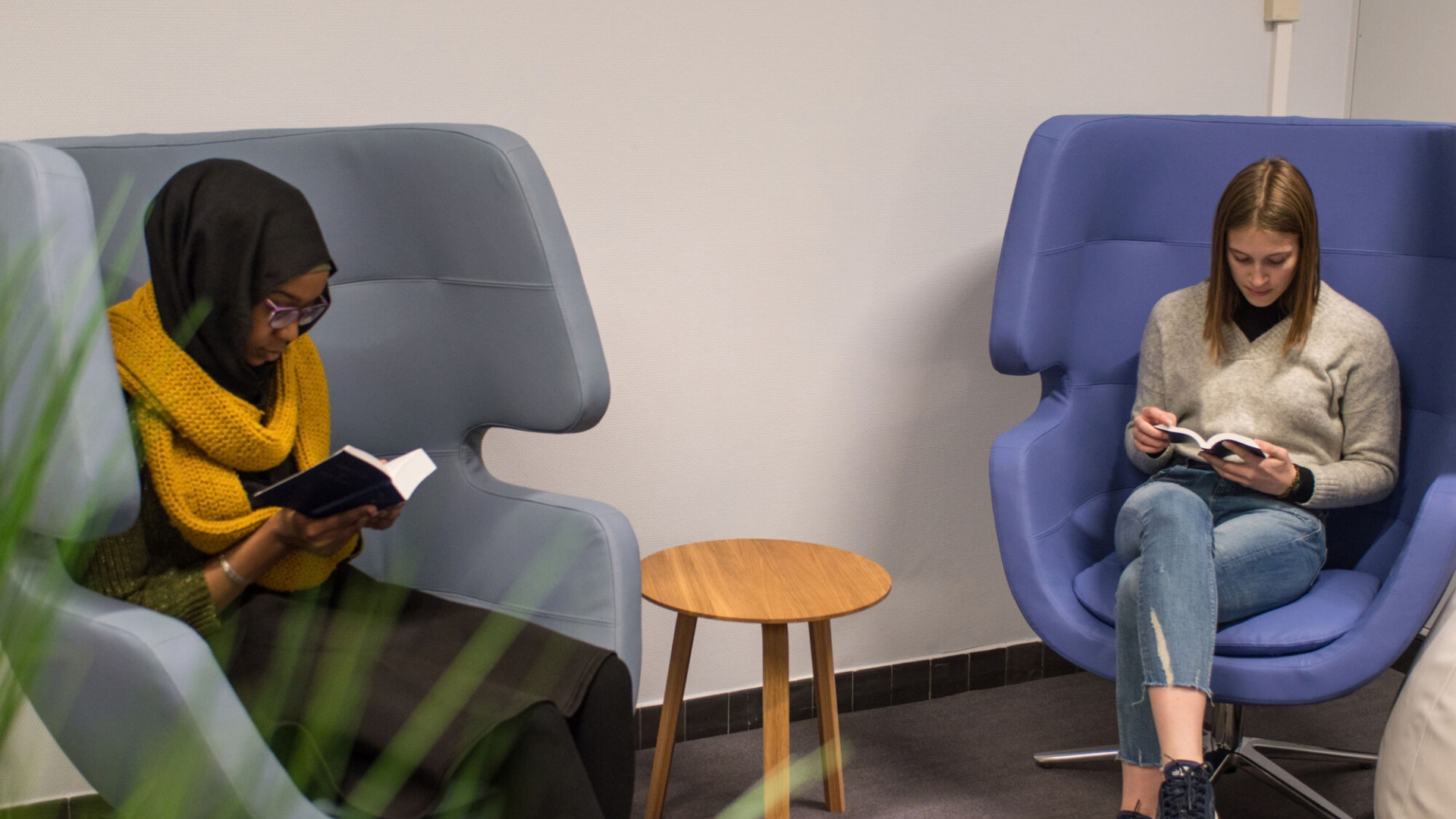
Pressing pause for a moment. For many students and staff, that’s not always a given on a busy campus. Between classes, meetings and everything else a day on campus brings, finding a moment of peace can be a challenge. That’s why quiet spaces on almost all our campuses offer a place to take a breather.
Everyone is welcome to use the quiet spaces to take a break from sensory stimulation, meditate, reflect or pray. The spaces aren’t associated with any particular religion or worldview: they’re open to anyone who needs a peaceful place.
‘A quiet space is essentially a practical expression of our vision of active pluralism,’ explains Fadima Aroua from the Diversity and Inclusion Team. ‘These spaces cater for different sensory, spiritual or religious needs. When people think of inclusion, they tend to think of policies or procedures, but it often comes down to small, practical things. The quiet spaces show that UAntwerp makes room for different needs and beliefs.’

‘A quiet space is essentially a practical expression of our vision of active pluralism. It shows that UAntwerp makes room for different needs and beliefs.’
– Fadima Aroua, policy officer Diversity and Inclusion Team
Peace when you need it
A recent evaluation of the quiet spaces confirms this need. More than half of users visit them daily, and four out of five use them at least once a week. Although prayer is an important reason for visiting for two-thirds of users, the spaces are also used for rest, reflection, meditation, yoga and studying.
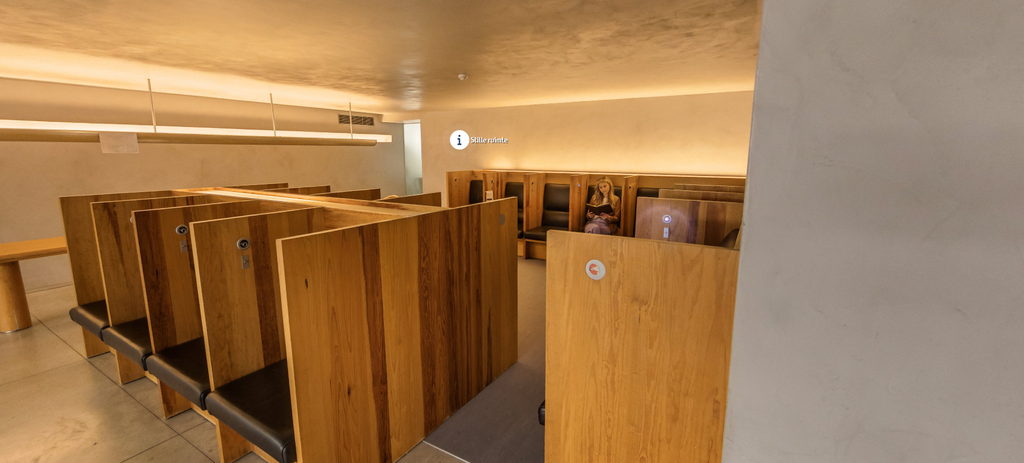
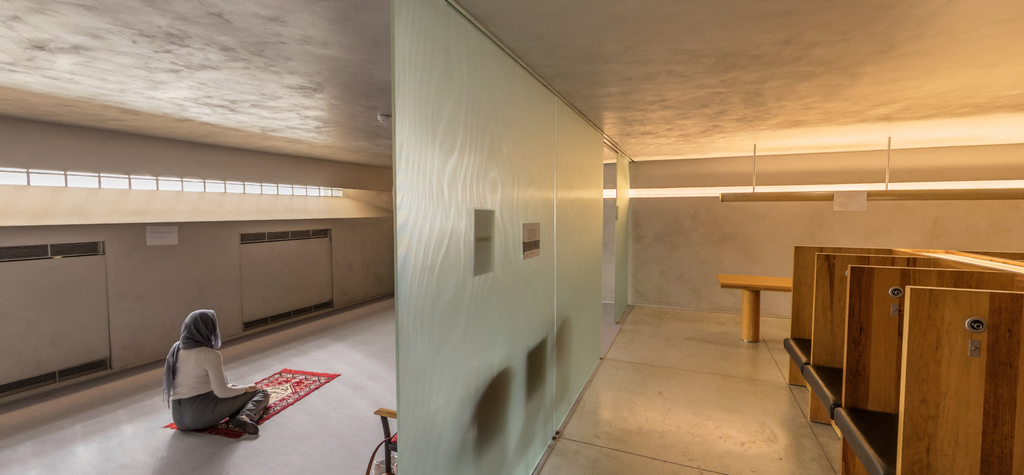
Several students make it clear just how much difference a place like this can make.
‘It gives me peace of mind. Without this space, it would be difficult for me to get through the rest of the day.’
‘For me, it’s also a moment to relax and reflect, which helps me focus even better on my studies.’
Staff also find a place here to step away from the bustle of the working day.
‘Over the years, silence has become an important part of my life, helping me put the pressures of the working day into perspective when I need to.’
‘This space gives me the opportunity to make time for relaxation and reflection between work activities.’
Space to be yourself
The quiet spaces contribute to more than wellbeing. They also strengthen people’s sense of belonging. This comes through clearly in the evaluation. Students say the spaces help them be themselves and feel welcome at the university.
‘In a nutshell, having this opportunity makes me feel at home at UAntwerp.’
‘The fact that UAntwerp offers this means so much to me and other students. It makes me feel welcome on campus.’
According to Mourad Berhili, who works at Pastoral Care, this ties in directly with what UAntwerp wants to achieve. ‘We want to be an inclusive and accessible campus where everyone feels welcome. That sense of belonging and psychological safety may well be amongst the most important reasons why we invest in these spaces.’ Their impact shouldn’t be underestimated. For example, students who want to pray no longer have to go home between classes, often without returning to campus afterwards.

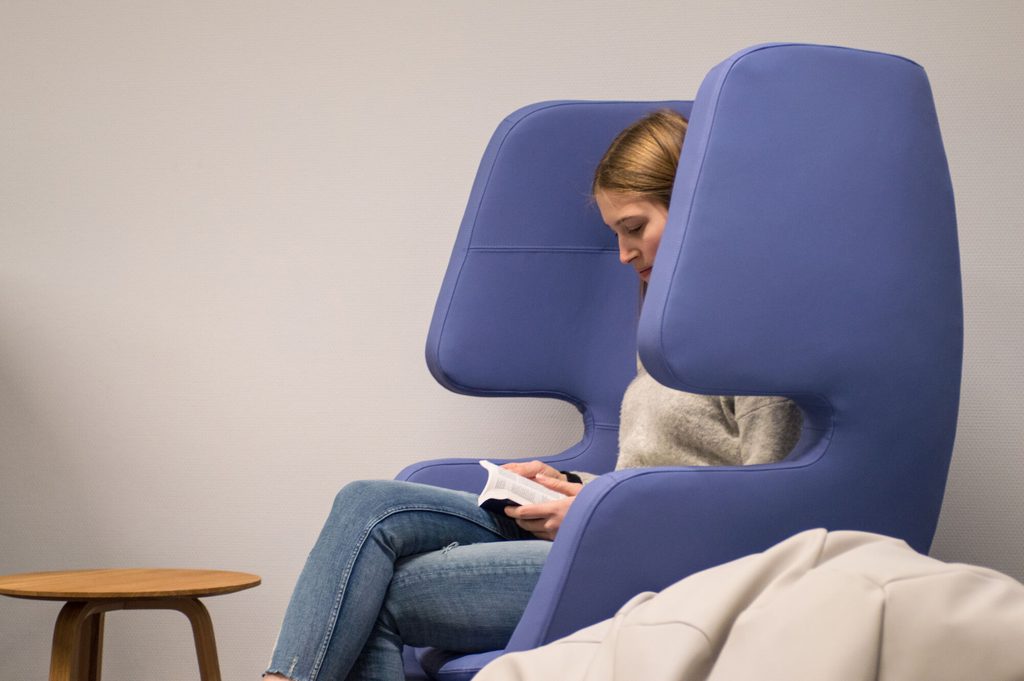
More than a prayer room
Allowing the spaces to be used for different purposes is a deliberate choice. Students with disabilities and people who are sensitive to sensory stimulation also say that a quiet, predictable environment offers significant benefits.
‘The idea is that the space belongs to no one and everyone at the same time,’ says Mourad Berhili. ‘It must not be claimed by any one group. Everyone should be able to use it in their own way.’
At certain times, however, the spaces are busy because Muslims come there to pray. ‘That’s why they’re sometimes mistakenly seen purely as prayer rooms, but that is certainly not the case,’ says Mourad. ‘We did feel it was important to provide an additional prayer room to ease the pressure at peak times. Two years ago, we set up an Islamic prayer room on the second floor of the Pastoral Service building (Zomaar een dak). That really is a place specifically for prayer. It also sends a message to Muslim students and staff that they’re welcome.’
Or, as one student puts it: ‘It has made my day so much easier because I no longer have to make up for missed prayers when I get home after classes. Having the opportunity to pray at the university has really made me very happy.’
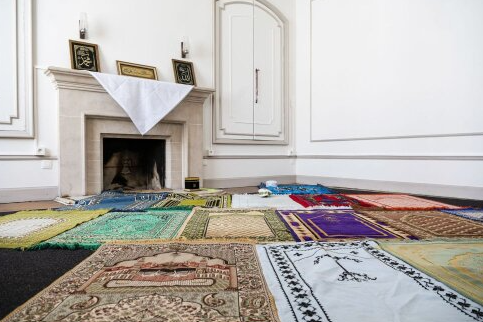
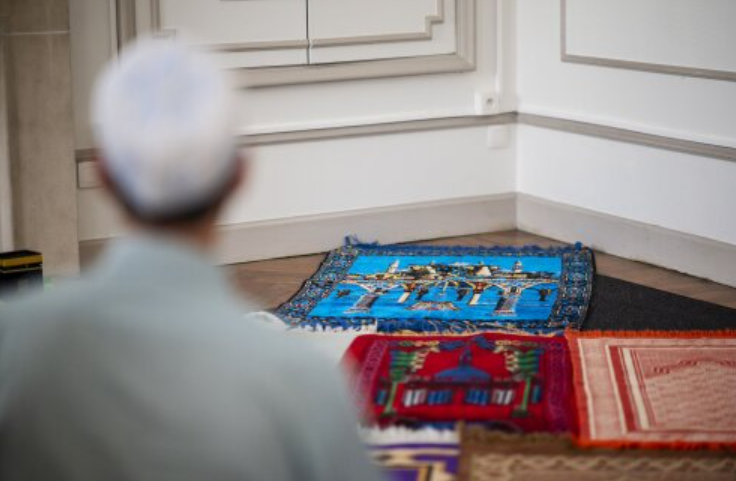
The quiet space must be accessible to everyone, regardless of their religious beliefs. At Campus Drie Eiken, for example, curtains have been installed so users can have some privacy if they need it. This keeps the space suitable for a range of activities, from prayer to yoga and reflection.
‘We also pay attention to the sensory aspects of the interior: soft colours, subdued lighting and as few visual distractions as possible, such as posters or paintings,’ says Yana Shokh from the Diversity and Inclusion Team.
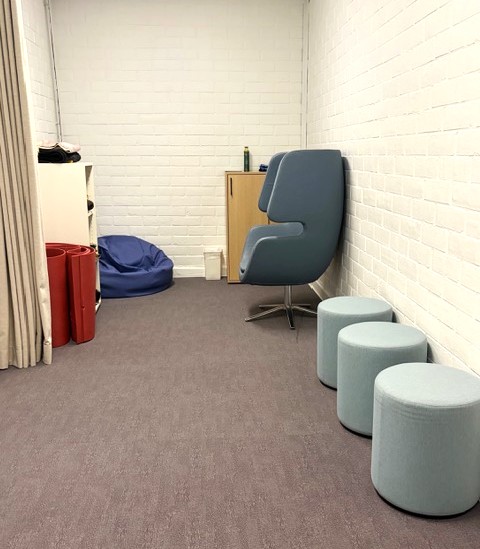
A curtain provides greater privacy for users.
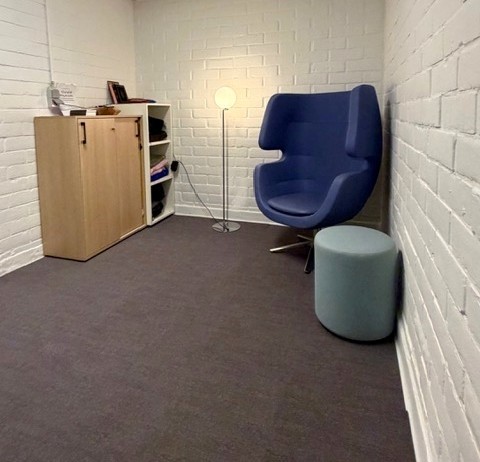
What could be improved?
The evaluation also shows that there is room for improvement. Around a third of respondents would like more capacity or a quiet space at Campus Middelheim, where a suitable room has yet to be found. In addition, almost three in ten users would like more information and clearer signage.
Fadima says they’re keen to respond to these needs: ‘Our ambition remains to provide at least one good-quality quiet space on every campus for students, staff and visitors. Although a quiet space may seem small compared with a lecture hall, library or student restaurant, its impact is greater than we might think.’
‘Finding new spaces isn’t easy,’ says Yana. ‘At Campus Groenenborger, we found an additional room with help from our colleagues responsible for infrastructure and room allocation. The existing space in Building V was quite small. That building is also due to be renovated or demolished in the future.’ Unfortunately, they haven’t yet managed to find a space at Campus Middelheim, even though many students and staff there would welcome one. They have to go to Campus Groenenborger instead.
Fadima and Yana understand the situation: ‘We realise that there are few options for a permanent room on a campus that already has a shortage of meeting rooms and offices, but we hope that university policy will take greater account of this need in the future, for example when planning new buildings or renovations.’
Anyone who knows of a promising space, especially at Campus Middelheim, is encouraged to let the Diversity Team know.
Where can you find the quiet spaces?
- Explore the locations of all the places where you can take a break from sensory stimulation.
- Besides the quiet spaces, there are other places too, such as the Narthex or the Ignatius chapel at the Stadscampus, or the Mindfulnest in the library.
Do you know of a room that is rarely or never used? Please contact Yana Shokh or Fadima Aroua.