

Scientists at the University of Antwerp and KU Leuven have shown that blocking ferroptosis, a specific form of cell death, can better protect donor organs during transplantation. ‘We developed FXT-001, a small molecule that protects organs against ischemia–reperfusion injury, one of the main causes of early transplant failure,’ says Professor Tom Vanden Berghe, head of the Cell Death Signaling lab at UAntwerp. Spin-off FiriX Therapeutics is now advancing ferroptosis inhibitors toward the clinic.
Organ transplantation saves thousands of lives every year, but the supply of high-quality donor organs is insufficient to meet the demand. Consequently, 10 to 20% of patients on waiting lists die before a suitable organ becomes available. To expand the donor pool, clinicians are increasingly using organs with a higher risk profile. These may include organs from older donors or from donors with less healthy lifestyles, such as smokers.
These organs are particularly vulnerable to ischemia-reperfusion injury (IRI), a type of tissue damage which occurs inherent in the transplantation process. IRI occurs in two stages: first, when blood supply is interrupted as the organ is retrieved from the donor (ischemia); and second, when circulation is restored in the recipient (reperfusion). This sequence triggers a cascade of oxidative stress, inflammation, and cell death that can critically compromise graft function.
Ferroptosis as the culprit
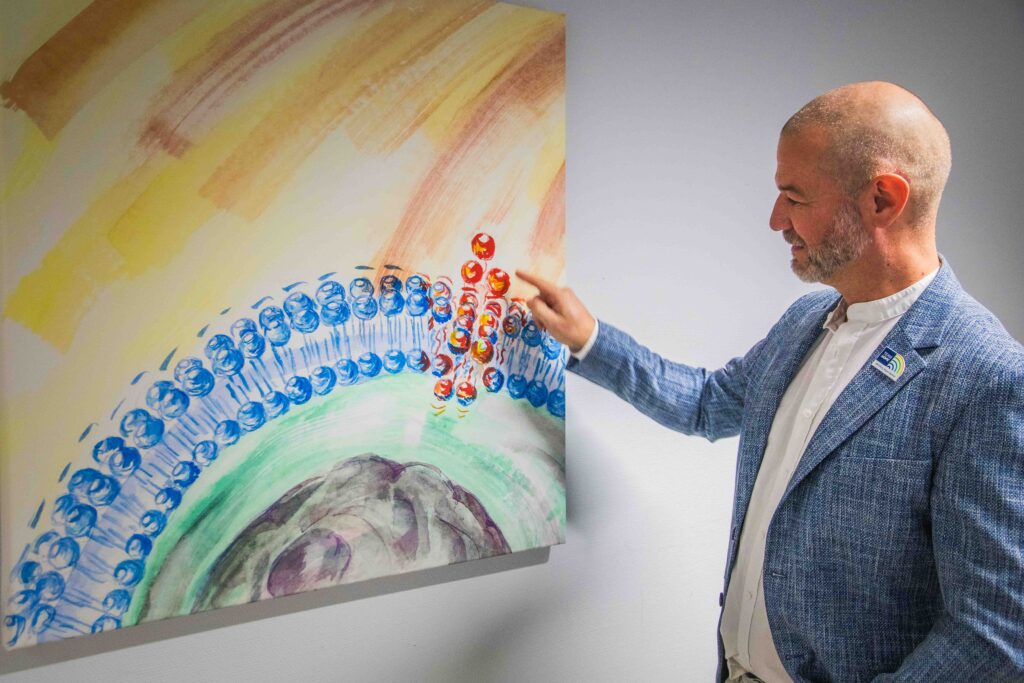
The new study, published in the leading journal Cell, identifies ferroptosis as a key mechanism underlying IRI in liver and lung transplantation. Ferroptosis is an iron-dependent form of regulated cell death in which iron drives the oxidation of lipids in the cell membrane; a process aptly described as biological rusting. ‘We observed that lipid peroxidation, the hallmark of ferroptosis, peaks very early after reperfusion and correlates with transplant injury in patients,’ explains Tom Vanden Berghe. ‘This revealed a clear therapeutic window to intervene.’
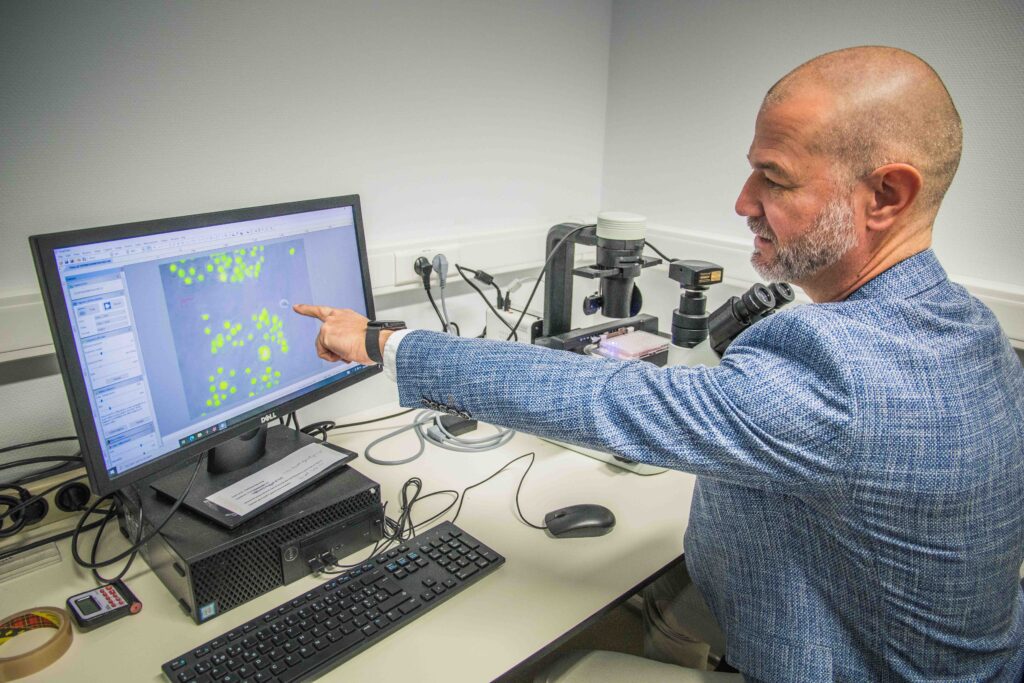
The research team subsequently developed FXT-001, a ferroptosis inhibitor that protects against this lipid peroxidation and modulates iron-driven reactions in cells. Unlike earlier experimental ferroptosis inhibitors, FXT-001 is stable, safe and suitable for clinical use. The results are spectacular. In models using pig livers, FXT-001 reduced organ damage and improved metabolic function. In human donor lungs that had been declined for transplantation, the drug reduced extravascular fluid accumulation and preserved lung elasticity.
Clinical relevance
Analysis of samples from 116 patients who underwent liver transplantation confirmed that lipid peroxidation correlates with early liver injury after transplantation. This makes ferroptosis a highly relevant therapeutic target. ‘After a decade of research with this porcine liver model, we have observed a clinically significant improvement in the function of higher-risk organs for the first time,’ explains Professor Nicholas Gilbo (CHU de Liège), clinician and co-author. ‘Ferroptosis inhibition during organ preservation holds real potential to safely expand the organ donor supply.’
‘These results are very promising,’ adds clinician and co-author Professor Arne Neyrinck (KU Leuven/UZ Leuven). ‘In transplantation medicine, we rarely see drugs with such a strong protective impact.’
The road to the clinic
‘To further strengthen clinical translation we developed second-generation compounds, FXT-002 and FXT-003, with enhanced pharmacokinetic and safety profiles,’ explains Professor Koen Augustyns, medicinal chemist at UAntwerp and co-author.
The groundbreaking research, supported by the FWO Strategic Basic Research (SBO) programme, has led to the creation of FiriX Therapeutics, a spin-off of the University of Antwerp. Professors Vanden Berghe and Augustyns aim to use this spin-off to further develop therapies targeting ferroptosis.
A broadly applicable strategy
The implications reach far beyond the transplant ward. Ischemia–reperfusion injury is a fundamental mechanism of tissue damage that strikes whenever blood flow is interrupted and restored; in heart attacks, severe trauma, strokes, major vascular surgery, and more. ‘Any situation where blood flow is temporarily interrupted can trigger this type of damage,’ says Vanden Berghe. ‘Together, these conditions represent one of the largest unmet needs in acute medicine, affecting millions of patients annually with few targeted treatment options.’
That is the opportunity FiriX is pursuing. By targeting ferroptosis as the central driver of IRI, FiriX is developing a platform strategy with the potential to address multiple high-burden indications from a single mechanistic insight. ‘By targeting ferroptosis, this could become a broadly applicable strategy in acute medicine,’ says Vanden Berghe. FiriX is currently advancing this vision and welcomes partners and investors who see the same potential in turning a fundamental biological discovery into transformative therapies.