
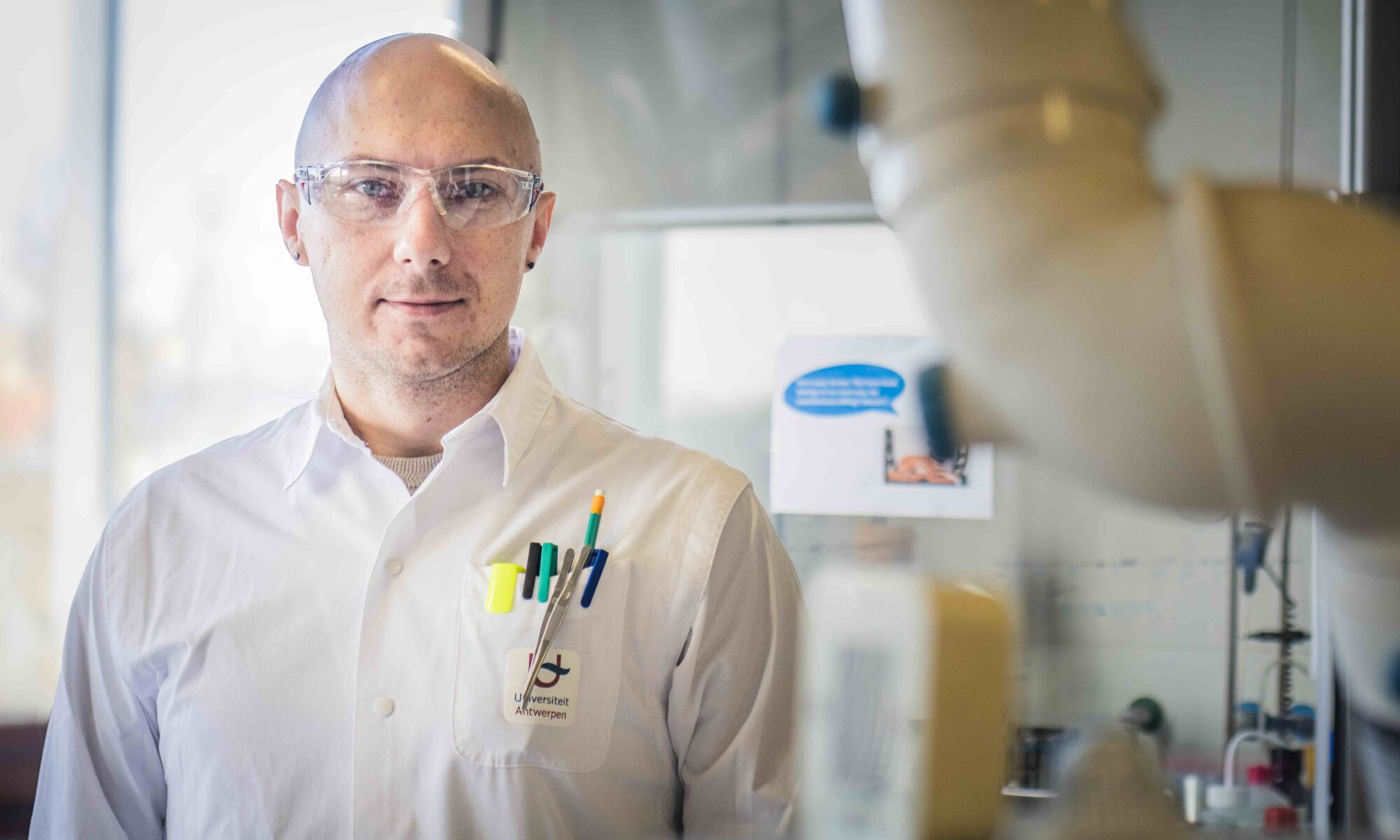
In the specialized field of medicinal chemistry, the search for precision in cancer therapy is a constant pursuit. At the Medicinal Chemistry Group of the University of Antwerp, MSCA Postdoctoral Fellow Dr. Adrian Fabisiak is leading this charge through his project, PyroVector, which seeks to transform how we treat Acute Myeloid Leukemia (AML). We sat down with Dr. Fabisiak to discuss his journey from Warsaw to Antwerp and take a deep dive into his research.
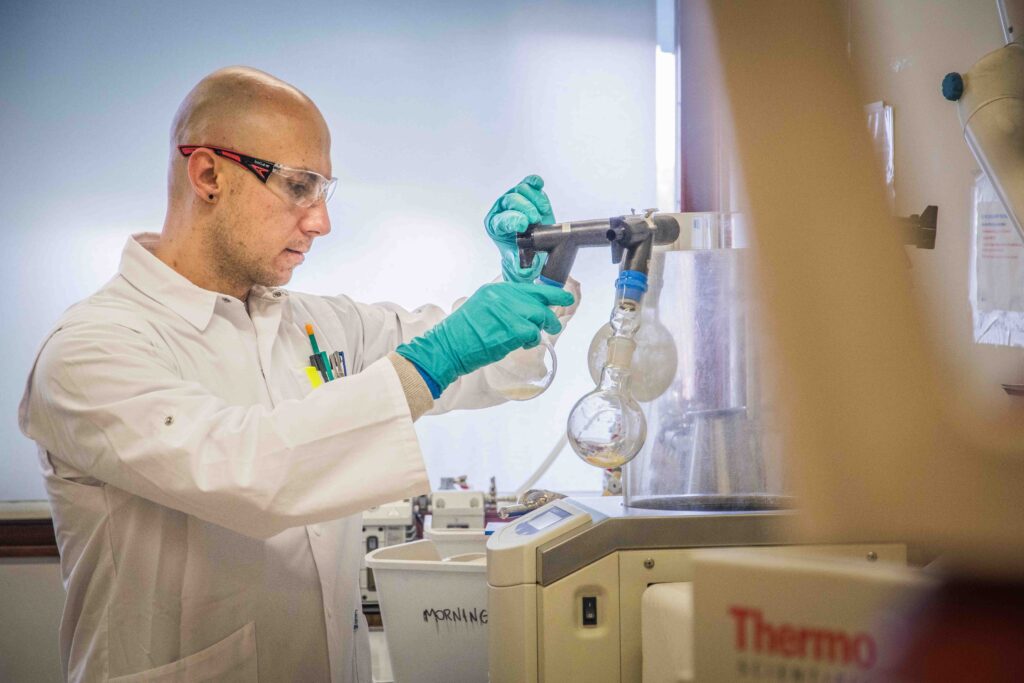
Adrian Fabisiak’s research focuses on pyroptosis, a unique form of programmed cell death that not only destroys cancer cells but also signals the body’s immune system to join the fight. By developing advanced targeting systems like antibody-drug conjugates (ADCs) and PROTACs, he aims to target the enzyme DPP9 with high precision, minimizing damage to healthy cells.
When did you first realize that you wanted to be a scientist?
“At the beginning, I didn’t really think about becoming a scientist as a career. I simply enjoyed doing experiments and was curious about how chemistry works in practice. That changed when I started organic chemistry laboratory classes at university. I was fascinated by the creativity behind designing and synthesizing entirely new compounds from simple building blocks, and by how even subtle structural changes could completely alter their properties and biological activities. Organic synthesis quickly became my favorite subject, and it remains so to this day.”
Every researcher faces obstacles. What has been one of the more difficult moments in your career so far?
“One of the most difficult moments was realizing that scientific progress is never linear. Early in my career, I expected that hard work would always quickly produce results. The reality is often different; behind even a small success, there are many failed experiments and countless hours in the lab. Research taught me humility and persistence. Often the most valuable lessons come from failed experiments.”
Your academic path eventually brought you to Belgium. What was that journey like and why did you choose the University of Antwerp?
“My academic journey began at the University of Warsaw in Poland, where I studied at the Faculty of Chemistry. During my PhD, I had the chance to conduct research in the United States, where working in multidisciplinary teams showed me how chemistry can be translated into biomedical research and contribute to the development of future therapies.
After my PhD, I joined the Laboratory of Medicinal Chemistry here at the University of Antwerp, led by Prof. Pieter Van der Veken. What particularly attracted me to the group was its broad research on serine protease inhibitors and their potential applications in cancer therapy. The group’s extensive expertise and strong collaborations with other laboratories created an excellent environment to combine my background in synthetic chemistry with research focused on developing future therapeutic strategies for acute myeloid leukemia.”
“Behind even a small success, there are many failed experiments and countless hours in the lab.”
Your research focusses on ‘pyroptosis’. Can you explain this mechanism?
“Pyroptosis is a type of programmed cell death where a cell destroys itself in a controlled way and at the same time sends alarm signals to the immune system. Because of this, it triggers inflammation and activates a local immune response. In the context of acute myeloid leukemia, this is particulary interesting because pyroptosis may not only kill cancer cells directly, but also help activate the immune system to better recognize and attack the remaining leukemia cells.”
A major challenge is that inhibiting the enzyme DPP9 can also harm healthy cells. What is DPP9 and how do you reduce collateral damage?
“DPP9 is an enzyme that is present in healthy cells, which makes its inhibition particularly challenging. To solve this, we use targeting systems. I often use the metaphor of the antibody as the a cargo ship, being designed to recognize and bind very specifically to markers that are present on leukemic cells. By attaching our ‘cargo’, we can transport it through the body in a safer and more controlled way. Only when the antibody binds to the target cell, the whole system can get inside, allowing the drug to be released.”
Your project PyroVector explores antibody-drug conjugates (ADCs) and PROTACs. What are these molecules?
“Antibody–drug conjugates, or ADCs, can be thought of as targeted delivery systems. They use antibodies to selectively transport a drug directly to ‘labelled’ cells, helping to minimize effects on healthy tissues. In contrast, PROTACs (PROteolysis TArgeting Chimeras) work in a different way. Instead of simply inhibiting a protein, they are designed to completely remove it from the cell by directing it to the cell’s natural degradation machinery. Essentially, while ADCs focus on precision delivery, PROTACs focus on targeted protein destruction.”
Looking toward the future, what is the ultimate impact you hope your research will have?
“Ultimately, we aim to show how modulation of DPP9 activity can trigger pyroptosis in leukemia cells. By understanding this process better, we hope to develop new therapeutic strategies that are both safer and more effective for AML treatment.”
Finally, what advice would you give to your 18-year-old self?
“Don’t be afraid to step out of your comfort zone and explore new fields – that’s often where the most exciting opportunities begin.”