

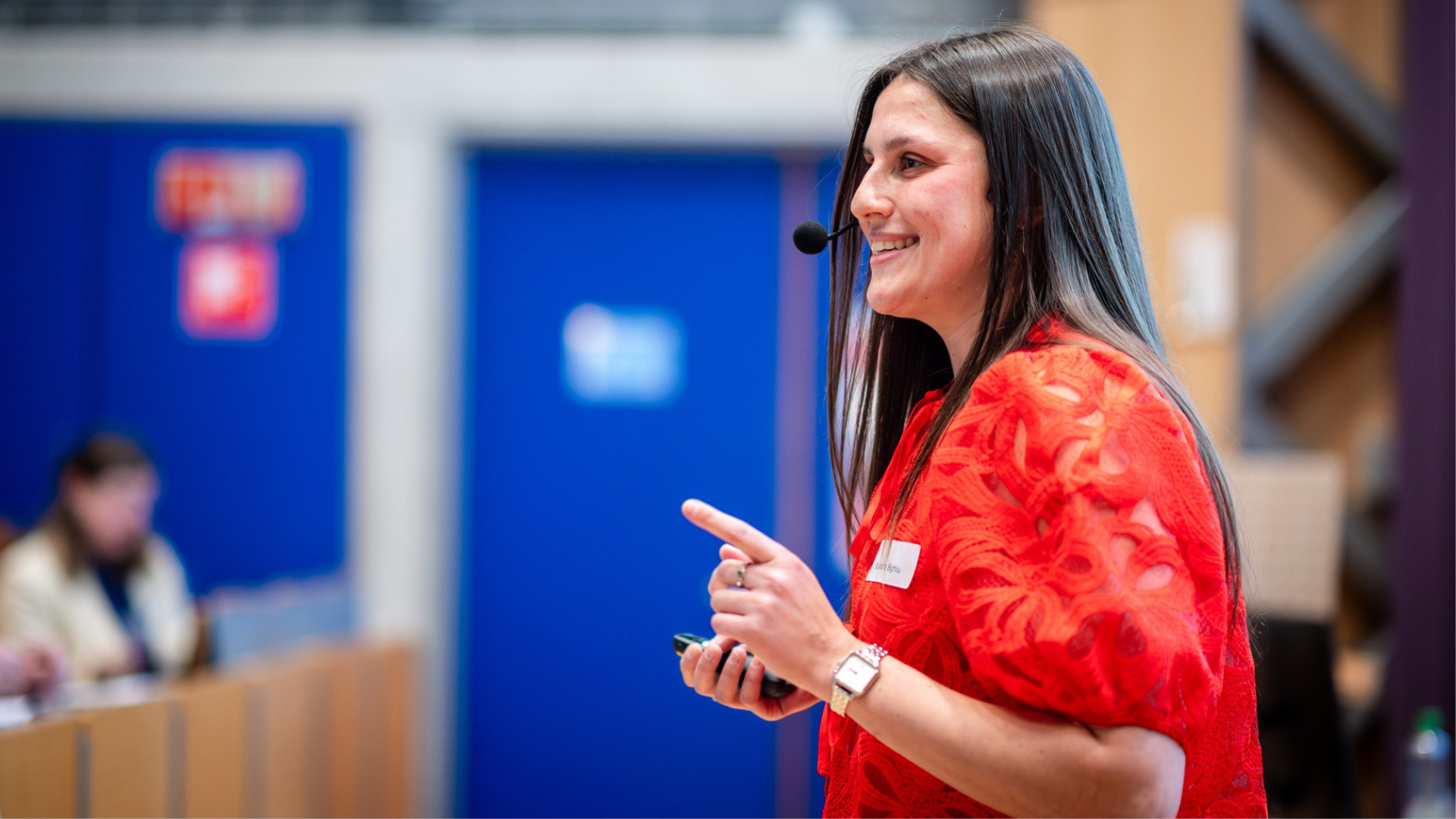
How PRESS>SPEAK helps researchers turn their research into stories that stick
Every researcher knows the feeling: your topic is complex, your data are complicated and your time is scarce. And yet, whether at a family gathering, for a journalist, for your faculty blog or for the stakeholders of your project, you want to make it clear in a short time why your work matters. The annual PRESS>SPEAK competition helps researchers do exactly that. Four participants share their experiences and their best communication tips.
From raw message to accessible story
PRESS>SPEAK candidates receive thorough preparation for the competition: they learn to search for their key message, build a clear story around it and learn to avoid or clarify jargon. Those who take part in the presentation competition practise in small groups and receive feedback on clarity, structure and visual support. Participants in the writing competition receive general training and individual coaching.
Caroline Bossuyt (participant in 2023) discovered how these opportunities to practise strengthened her self-confidence: ‘Soon I’ll be speaking on Weetikveel Academy, a podcast created by national public broadcaster VRT 1. That’s quite a step outside my comfort zone, but much more feasible thanks to PRESS>SPEAK.
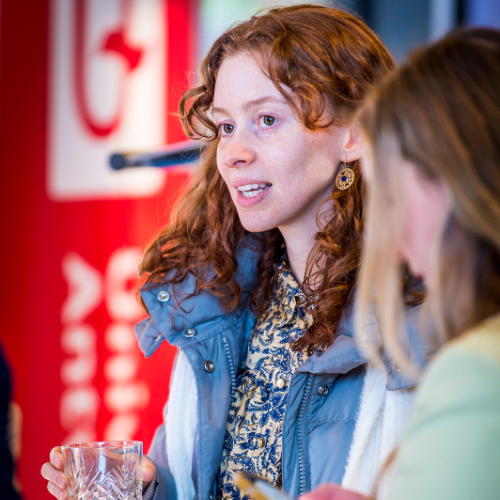
PRESS>SPEAK helped me take a first step and then the snowball kept rolling, a growth path that suits me much better than making one big leap all at once.
– Caroline Bossuyt
Caroline has since also recorded a video, appeared on stage at the Fusieshow and the Nerdland Festival, and contributed to several newspaper articles.
Ready for the stage
Just before the presentation competition, there is a technical run-through: getting to know the room, the microphone and the slide clicker. That check often helps calm the nerves.
During the competition itself, learning opportunities take centre stage: there are questions from the audience and the jury provides feedback. This gives a good sense of what works: a strong opening, concrete examples, a clear metaphor, a conclusion that brings the audience back to the bigger picture.
Winners stand out to the jury and the audience because of their crystal-clear message and their enthusiasm. Not too many details, no overloaded slides, but a story you could retell at the kitchen table in the evening. On the day of the competition, it also becomes clear which text resonates most. A jury and the audience present indicate their preference and the winning texts appear on UAntwerp’s Stroom platform and in The Bulletin.
Charlotte Harding (participant in 2025) noticed how that visibility opens doors: ‘The more people get to know your research, the more opportunities arise for collaboration or interest from funders, partners or end users. You don’t have to wait until your results are finalised; this is worthwhile for young researchers too. The video I was able to record after the competition has already proven very useful. And I still follow the communication of the colleagues from my competition group with great curiosity.’
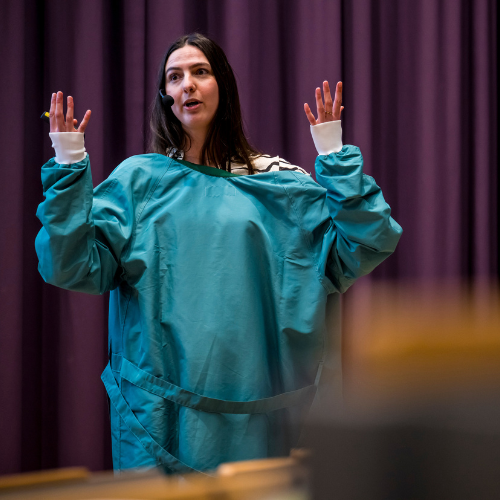
The more people get to know your research, the more opportunities arise for collaboration or interest from funders, partners or end users.
– Charlotte Harding
Tips from an expert
Emilie Cardon, participant in 2021 and member of the science communication team, compiled the most important presentation tips on Teams.
Her key takeaways:
- Think about your audience: who are you speaking to, what do they already know, what do they want to know?
- Formulate your key message in one sentence. What should they definitely remember?
- Build a clear story: from problem to approach, example and a closing with impact. Cut the side issues.
- Use an attention grabber: a joke, a question for the audience, a metaphor, a link with current events, etc.
- Use slides sparingly. Mainly make them visual (for example a photo or a diagram) to support your story.
- Practise out loud with a stopwatch, microphone and clicker. Vary your pace, intonation and pauses. People prefer listening to someone who speaks a little more slowly.
Write clearly
Many of these tips also apply to writing: keep your audience in mind and tailor your key message to them. How do you start? Begin with a blank page (so don’t simply copy your paper).
Also make sure to:
- Structure your text clearly with subheadings
- Avoid jargon or explain it with an example
- Write short sentences in the active voice
- Ask a non-specialist to proofread
- Delete where possible
A springboard towards communicating research clearly: Georgios Pipintakos explains
“Taking part in PRESS>SPEAK was truly a crucial step for me in turning my complex research into clear, engaging stories for diverse audiences. The experience I gained there even formed the basis for the communication and outreach plan in my successful Marie Skłodowska-Curie Postdoctoral Fellowship 2025 application. Apparently presenting research results in an accessible way and connecting science with society made the difference in this competitive call.”

Taking part in PRESS>SPEAK was truly a crucial step for me in turning my complex research into clear, engaging stories for diverse audiences.
– Georgios Pipintakos
“In addition, my improved communication skills have helped me in recent years to make my research understandable for citizens, stakeholders andscientists from other fields. Recently I was even honoured for that engagement, when I received the Robert Oppenheimer Award 2025 from UAntwerp”
PRESS>SPEAK 2026: new young talent
The 2026 edition once again showed how much communication talent our early-career researchers have. Seven PhD and postdoctoral researchers presented their work in five-minute presentations. Each contribution was remarkably clear, accessible and well structured.
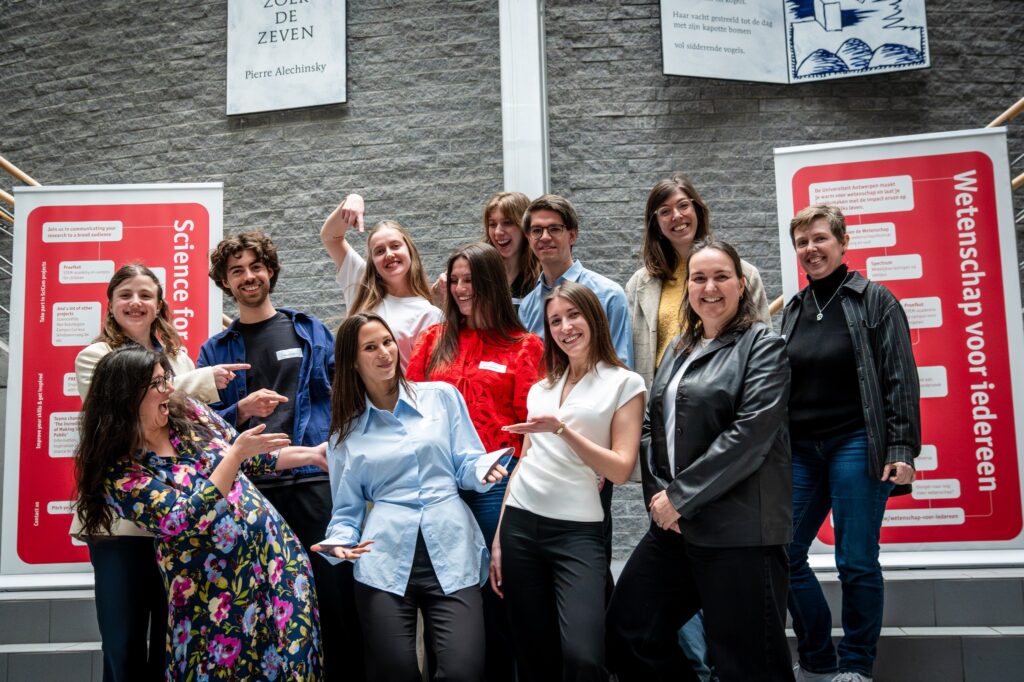
Complex themes such as early detection of Parkinson’s disease, circular museum displays, CO₂ recycling, hearing loss, breast reconstruction, dementia and climate solutions using rocks were effortlessly translated into understandable, engaging stories that you could easily retell at the kitchen table.
Have a look at the overview of the winners and the photo report from PRESS>SPEAK 2026.
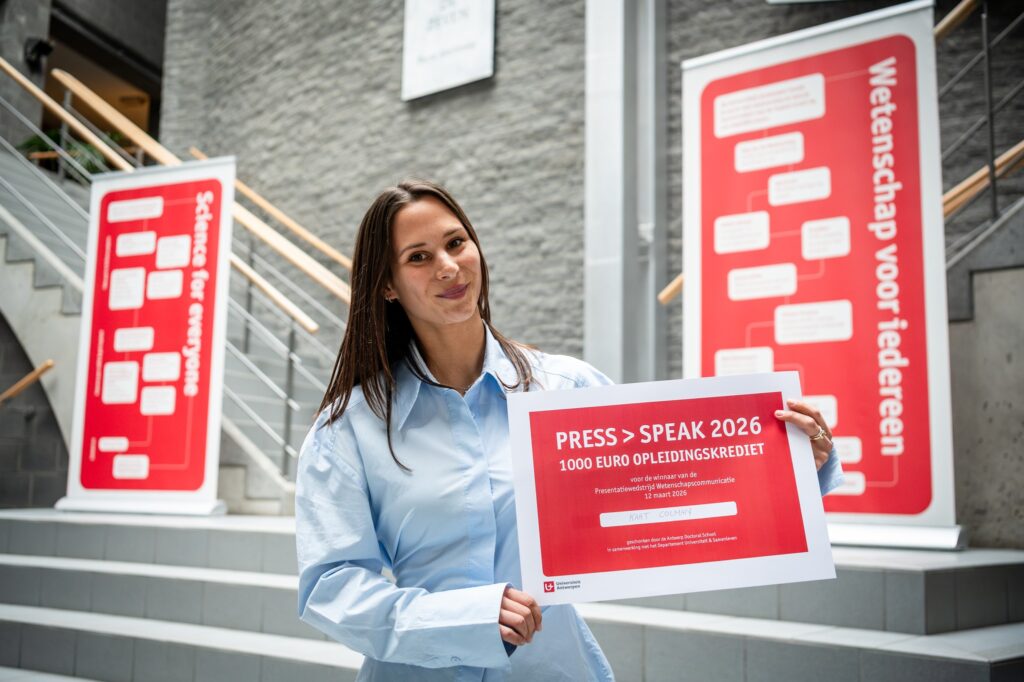
You can watch the video of the winner of the Public Speaking Competition, Kaat Colman, presenting ‘Sleep as an early predictor of Parkinson’s disease: the critical window of opportunity’ on Stroom as soon as it is ready.
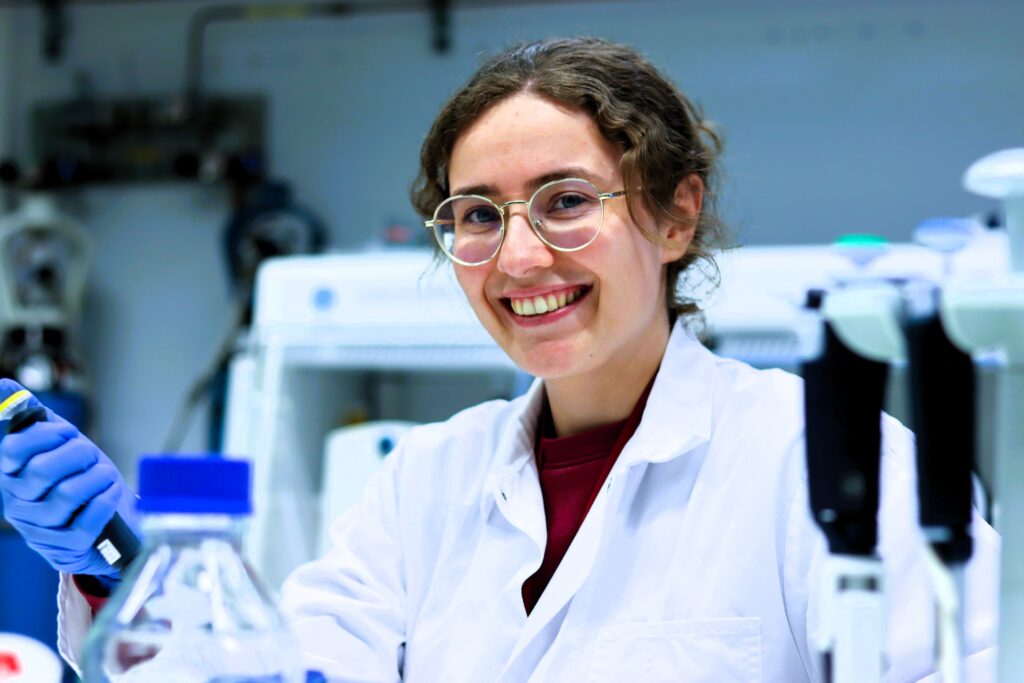
The entry by the winner of the writing competition, Hannah Zaryouh, entitled ‘When cancer learns to escape, we fight back’, can also be found on Stroom.
The jury summed it up nicely:
Kathleen Bracke (Science journalist VRT and University of Flanders): ‘The combination of content and structure worked extremely well: I could immediately follow along. You can also feel how genuine these researchers’ passion for their topic is. That always works.’
Lise Wouters (Content Manager, Marketing and Communications Department): ‘It’s impressive how the participants translate difficult topics into a clear story without sacrificing scientific accuracy. They often used strong images or metaphors as well, exactly what you need to understand the story. This is how we make science accessible to a broad audience.’
Marianne De Voecht (Science communication expert, RIVA): ‘I love it when a presentation makes me curious. And each of them did exactly that.’
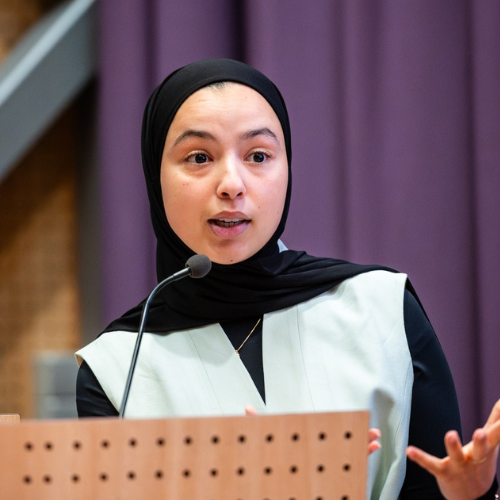
Malika Belrhazi, last year’s winner, once again emphasised the importance of a competition such as PRESS>SPEAK during the introduction.
‘By engaging in science communication, you give a real gift to society.’
Ready to get started yourself?
You don’t have to wait for the next edition to start sharpening your communication skills. On this Teams channel ‘The Incredible Art of Making Science Public’, you’ll find concrete tips for presenting clearly and writing in an accessible way. Will we see you there or at the next edition of PRESS>SPEAK?
Contact persons: Tine Rams and Els Grieten, science communication expertise unit