

A System Under Structural Constraint
Higher education in Palestine operates within one of the most complex and protracted crisis contexts globally. Universities across Gaza and the West Bank function under persistent political instability, movement restrictions, and fragmented infrastructure, all of which shape access to education, institutional capacity, and academic collaboration [1]; [2]. Despite these structural constraints, the sector has consistently proven its resilience and sustained commitment to maintaining learning opportunities and academic standards.
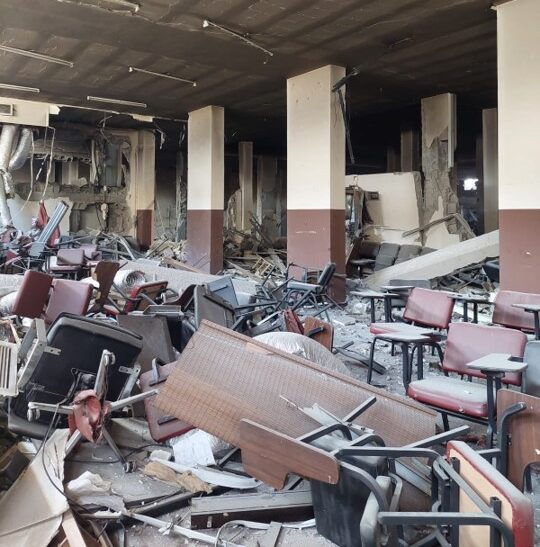
Recent developments, particularly in Gaza, have significantly intensified these challenges, pushing higher education institutions (HEIs) into an unprecedented phase of disruption. The current context demands not only an examination of infrastructural damage but also a deeper understanding of the less visible yet equally critical impacts on learning, well-being, and long-term human capital development [3].
The Psychosocial Dimension of Educational Disruption
While the physical destruction of educational infrastructure is substantial, the most pervasive and under-addressed impact of the crisis lies in the mental health and psychosocial domain. Prolonged exposure to conflict, displacement, and insecurity has led to widespread psychological distress among students, educators, and academic staff. Evidence indicates that a vast proportion of young people, particularly in Gaza, require some form of mental health and psychosocial support (MHPSS), with elevated rates of anxiety, depression, and post-traumatic stress disorder (PTSD) [4].
This psychosocial burden has direct implications for educational outcomes. Chronic stress impairs cognitive processes such as memory, attention, and emotional regulation, which are essential for effective learning [5]. Consequently, students experience declining academic performance, increased disengagement, and heightened risk of dropout. For educators, sustained exposure to stress undermines teaching effectiveness and contributes to professional burnout. The result is a systemic weakening of educational quality and continuity [6]; [7].
Gaza: Higher Education Amid Systemic Devastation
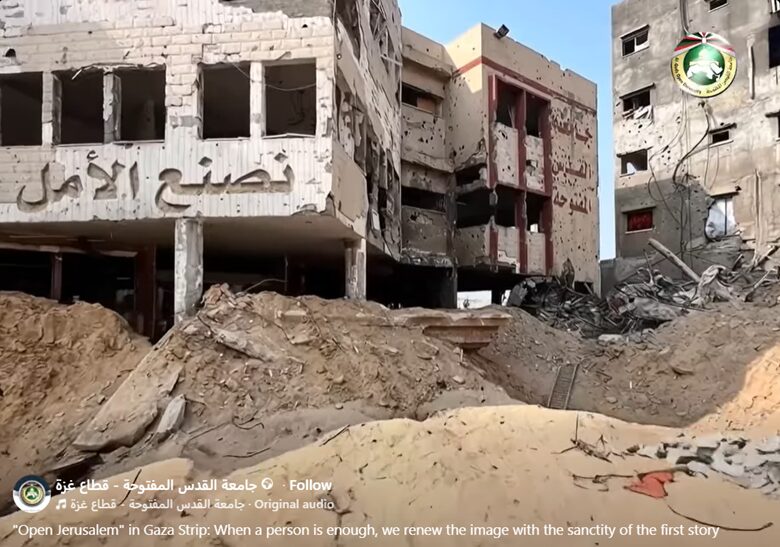
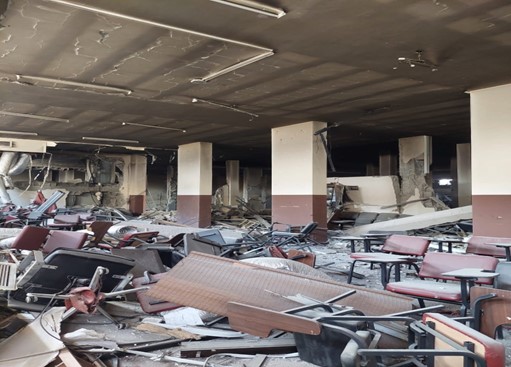
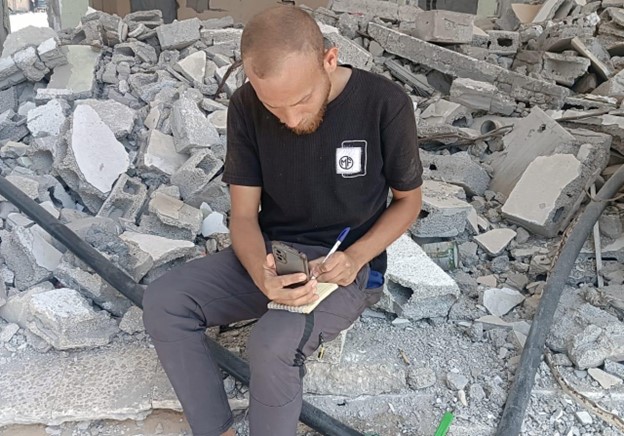
The situation in Gaza represents an acute manifestation of these challenges. Since late 2023, the majority of educational institutions have been damaged or destroyed, including all universities, resulting in large-scale disruption to higher education [8]. Hundreds of thousands of students have experienced prolonged interruptions to their studies, while academic infrastructure, including laboratories, libraries, and digital systems, has been severely compromised [9].
In addition to infrastructural losses, the human cost has been profound. Members of the academic community, including students and faculty, have been killed or injured, further weakening institutional capacity. Universities in Gaza now operate under extreme constraints, where maintaining even minimal educational continuity requires extraordinary effort. In this context, higher education is not only an academic endeavor but also a critical component of societal resilience and recovery.
The West Bank: Persistent Disruption and Fragmentation
In the West Bank, higher education institutions operate within a comparatively less acute but still highly constrained environment. Movement restrictions, periodic closures, and ongoing security incidents continue to disrupt access to campuses and academic activities [10].
These disruptions create an unpredictable learning environment, affecting both students and faculty. In addition, exposure to ongoing instability contributes to elevated levels of psychosocial stress, which further impacts academic engagement and performance. Although institutions in the West Bank have demonstrated adaptability and resilience, the cumulative effects of repeated disruptions continue to pose significant challenges to educational continuity and quality.
Erosion of Learning Continuity and Student Preparedness
One of the most significant consequences of the current crisis is the erosion of educational continuity across the learning continuum. Palestinian universities increasingly receive students whose prior education has been disrupted by multiple crises, including pandemic-related closures followed by intensified conflict [11].
As a result, many students enter higher education with gaps in foundational knowledge, reduced academic preparedness, and heightened psychological distress. These challenges complicate the transition to university-level study and increase the likelihood of disengagement and dropout. The long-term implications extend beyond individual outcomes, posing risks to broader human capital development and socio-economic recovery.
Institutional Responses and Operational Constraints
Universities are expected to function as stabilizing institutions within their communities, providing not only education but also a sense of continuity and support. However, they face substantial operational constraints, including unreliable electricity, limited connectivity, and shortages of resources.
In response, many HEIs have adopted hybrid or emergency remote learning models. While these approaches have enabled some level of continuity, they often fall short in ensuring equitable access and maintaining academic quality [12]. Students who are displaced, economically disadvantaged, or lacking digital access are particularly affected.
Moreover, institutional responses to the psychosocial dimensions of the crisis remain limited. Although mental health is increasingly recognized at the policy level, implementation within universities is often fragmented and under-resourced [13]. In addition, meaningful engagement with local communities and civil society organizations is essential for building resilient and sustainable higher education systems [14].
This highlights a critical gap between social involvement, policy frameworks and operational practice. Strengthening partnerships between universities, local communities, youth groups, and civil society actors can enhance social cohesion, promote community-based support networks, and ensure that educational initiatives remain responsive to local needs and realities.
Towards Resilient and Sustainable Higher Education Systems
Building resilient higher education systems in Palestine requires coordinated, long-term strategies that strengthen institutional capacity, ensure educational continuity, and respond to the psychosocial and developmental needs of students and communities.
1. Strengthening flexible and inclusive learning systems through hybrid and accessible educational approaches.
2. Integrating mental health and psychosocial support within higher education policies, curricula, and student services.
3. Promoting trauma-informed and student-centered teaching practices to enhance learning and engagement.
4. Investing in digital infrastructure, innovative technologies, and equitable access to educational resources.
5. Enhancing institutional, cross-sector, and international partnerships to support integrated educational responses.
6. Fostering community and civil society engagement to strengthen social cohesion and shared ownership of resilience efforts.
7. Advancing academic cooperation between institutions in Gaza and the West Bank through shared platforms and collaborative initiatives.
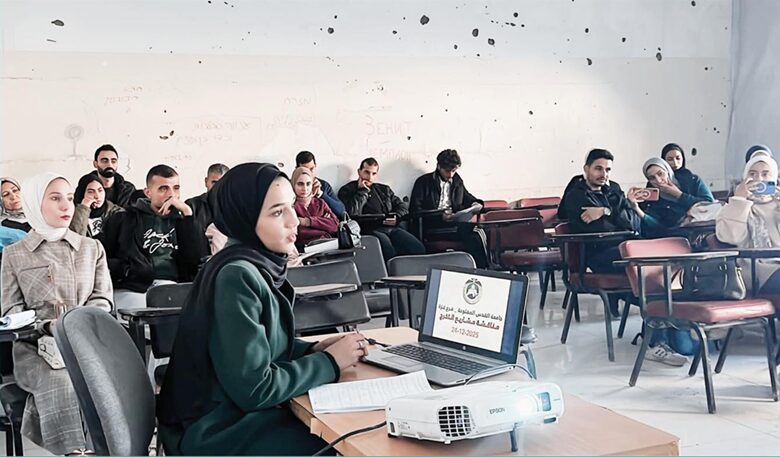
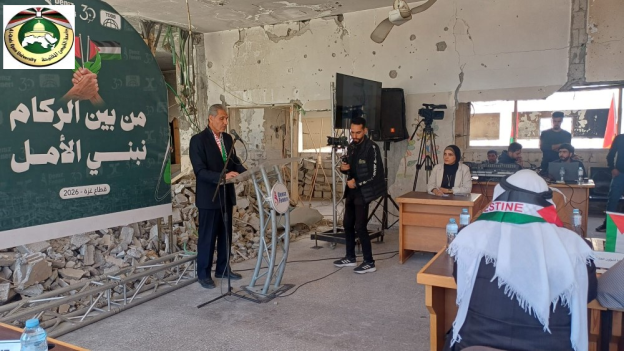
Al-Quds Open University, in a national initiative and through its 21 branches across Palestine, has provided students from different universities in both the Gaza Strip and the West Bank with access to education through its academic platforms, enabling them to continue and complete their studies during times of crisis. This experience represents a valuable model of institutional collaboration and educational resilience that could be replicated by other universities across Palestine.
A notable example of international collaboration in this area is the Education Against All Odds: Strengthening Higher Education in Palestine initiative, which supports institutional resilience and capacity building through academic partnerships.
Conclusion: Education as an Act of Hope and a Foundation for Resilience
The challenges facing higher education in Palestine go beyond infrastructure and access. They include the essential conditions for learning, well-being, and development. While the current crisis has exposed major vulnerabilities, it has also highlighted the system’s resilience and potential for transformation.
Palestinian universities are more than educational institutions; they are powerful acts of hope and vital spaces for knowledge production, social cohesion, and future development. Sustaining them is essential for both individual learners and societal recovery.
Investing in higher education is therefore a central pillar of resilience. By integrating psychosocial support, fostering innovation, and strengthening institutional capacity, Palestinian HEIs can remain pillars of hope and drivers of sustainable development amid ongoing crisis.
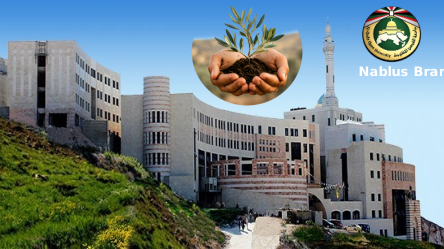
HEIs represent hope and resilience.